The decision between luxury and mid-market Dubai real estate is no longer a matter of preference — it is a portfolio architecture decision. Dubai’s property market in 2026 operates as two structurally distinct investment environments, each driven by different demand sources, different yield mechanics, and different exit dynamics. Investors who understand how the two tiers actually behave — rather than how they are marketed — make significantly better capital allocation decisions.
Getting this allocation right matters more than ever. Dubai recorded over 180,000 property transactions in 2025, the highest annual volume in the emirate’s history. That volume does not distribute evenly across segments. Luxury and mid-market assets are both performing, but for different reasons and through different mechanisms. Investors who apply the wrong expectations to the wrong tier find themselves holding assets that are technically performing but not delivering against their actual portfolio goals.
How Dubai’s Property Market Split Into Two Distinct Investor Tiers
Dubai is no longer a single property market. The post-2020 population surge — the emirate crossed 3.8 million residents in 2025 — combined with sustained high-net-worth inflows from Europe, South Asia, and the GCC has created a bifurcated demand structure that now shapes pricing, yield behaviour, and transaction velocity at every level. Understanding where each tier’s demand originates is the foundation of every allocation decision.
The bifurcation extends to purchase structure and financing eligibility. UAE banks apply different mortgage eligibility policies to luxury versus mid-market properties, and in some cases to specific corridors within each segment. Maximum LTV ratios for UAE nationals and non-residents, stress-test rate assumptions, and debt-service coverage thresholds can all differ between a DIFC penthouse purchase and a JVC apartment purchase at a fraction of the price. Understanding how the financing environment interacts with segment selection before viewing properties prevents the situation where a buyer’s intended structure is incompatible with the chosen asset — a common cause of transaction failure at an advanced stage.
Where Luxury Demand Comes From
Luxury residential demand in Dubai is globally sourced. Buyers comparing Palm Jumeirah, Jumeirah Bay Island, DIFC penthouses, and Downtown full-floor apartments are not primarily driven by local income levels — they are driven by the same forces that move prime London, Monaco, and Singapore markets: wealth migration, tax optimisation, residency diversification, and lifestyle asset acquisition. This is discretionary capital moving at the highest tier of the global wealth stack.
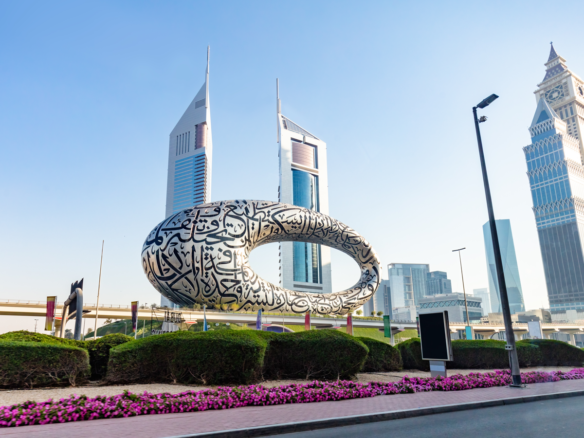
Pricing reflects that positioning. Prime waterfront addresses on Palm Jumeirah and Jumeirah Bay Island are transacting at AED 5,000 to AED 8,000 per square foot for branded and waterfront units. DIFC and Downtown penthouses range from AED 4,000 to AED 7,000 per square foot depending on floor, finish, and developer. Branded residences under Bulgari, Armani, Six Senses, and Dorchester labels have sold at premiums above those brackets, with some transactions exceeding AED 10,000 per square foot in 2024 and 2025. Buyer demographics at this tier skew toward Indian ultra-HNW buyers, European private wealth relocating from high-tax jurisdictions, and GCC family offices acquiring second and third homes. This demand is structurally tied to global wealth sentiment, not to Dubai’s employment market.
Where Mid-Market Demand Comes From
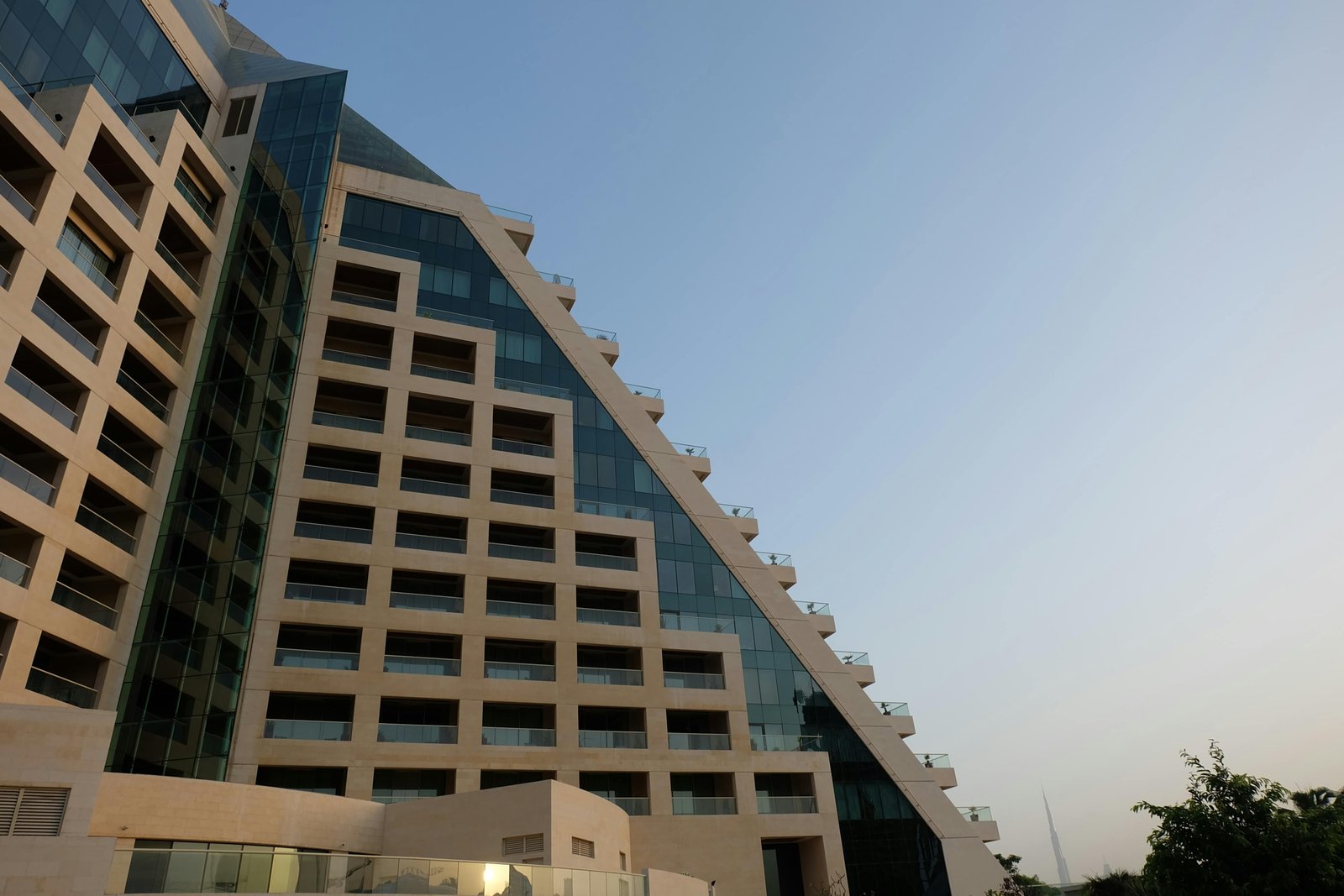
Mid-market demand is built on entirely different foundations. Dubai’s professional workforce — across finance, technology, logistics, hospitality, and healthcare — continues to expand year on year, and these residents need housing. The employment-driven population growth creates structural rental demand in the AED 1,000 to AED 2,000 per square foot bracket, concentrated in areas that offer proximity to employment centres, established amenities, and practical infrastructure.
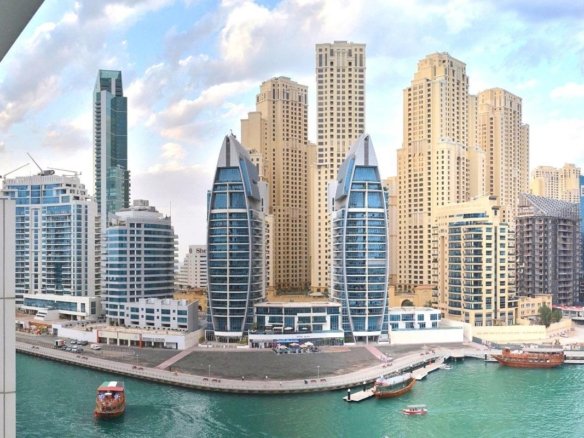
Jumeirah Village Circle, Business Bay, Dubai Hills Estate, Dubai Marina, and Arjan are the primary zones for this demand. JVC alone has consistently produced gross rental yields between 7% and 9%, placing it among the highest-yielding residential submarkets of any major global city. Business Bay and Dubai Marina sit in the 6% to 8% range, supported by high occupancy rates and a tenant pipeline that regenerates continuously as corporate employment grows. This demand is not sensitive to global wealth cycles. It is driven by the daily reality of a city that is still expanding rapidly and needs a deep, growing housing base to support its workforce.
Yield vs Appreciation — What Each Segment Actually Delivers
The most persistent investment mistake in Dubai real estate is applying the wrong return expectation to the wrong tier. Luxury and mid-market assets do not compete on the same financial logic — they are structurally optimised for different portfolio roles, and conflating them produces allocation errors that compound over a hold period.
The Luxury Return Profile
Luxury property in Dubai is an appreciation-led asset class. Gross rental yields on prime Palm Jumeirah villas and Jumeirah Bay Island properties typically range between 3% and 5% — lower than mid-market, and deliberately so. The return thesis for luxury is capital appreciation driven by scarcity and sustained global demand depth, not annual cash flow.
The pipeline of genuinely scarce luxury addresses in Dubai is finite and will not expand significantly. Waterfront land is not created. Branded residences with internationally recognised operators have waiting lists, not excess supply. When global wealth migration into Dubai continues — as it has done consistently since 2021 — scarcity-driven appreciation compounds over time. Investors who acquired Palm Jumeirah villas in 2020 at AED 1,500 to AED 2,000 per square foot hold assets now valued at AED 5,000 to AED 8,000 per square foot in many comparable transactions. That is a capital appreciation story, not a yield story, and the portfolio strategy must be structured around that reality from the outset. Luxury is also more sensitive to global risk sentiment — when macro uncertainty rises, discretionary luxury purchases slow — which is why these positions are planned as medium-to-long holds rather than short-cycle investments.
The Mid-Market Return Profile
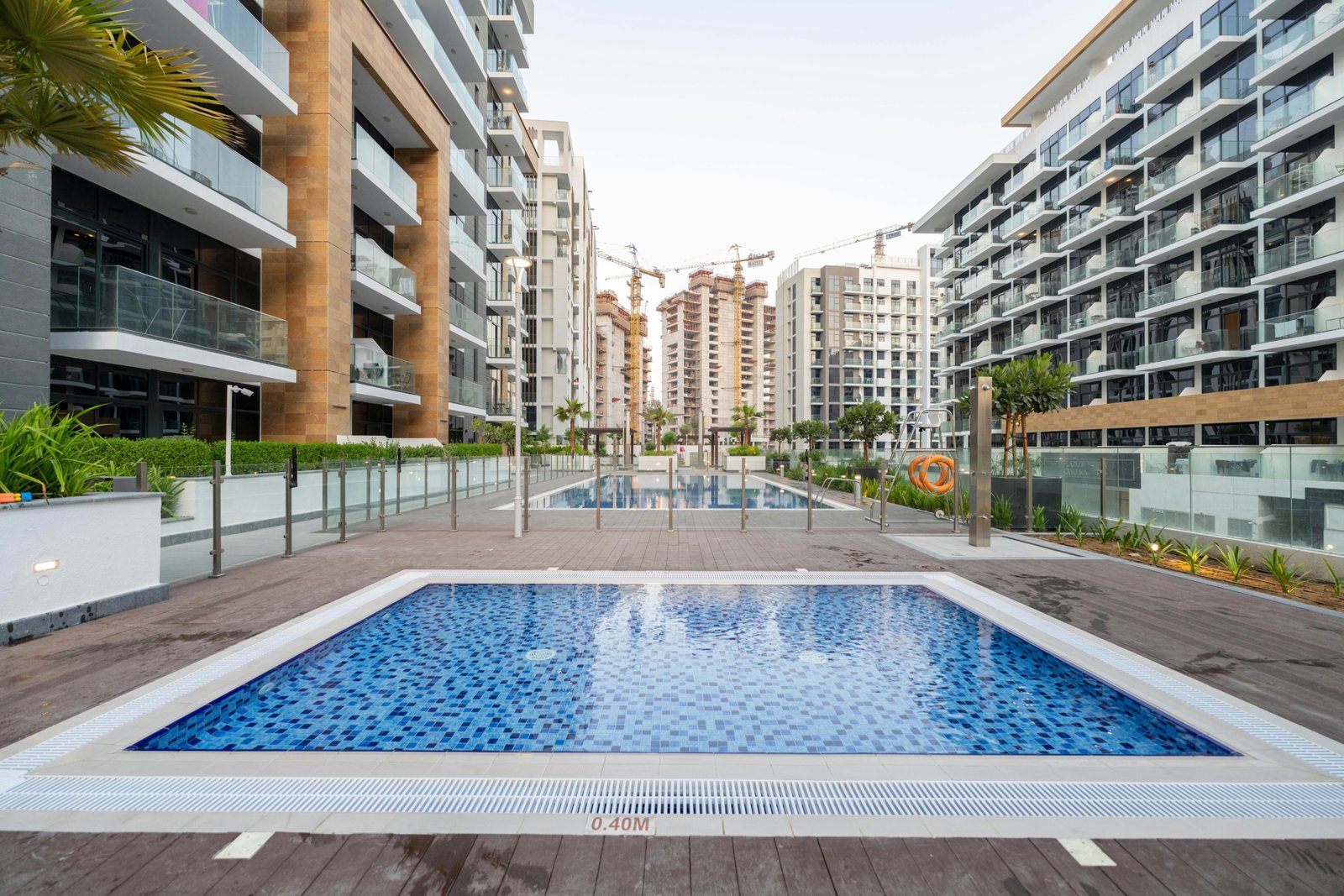
Mid-market assets are income-led investments with a clear and measurable return mechanism. The depth of tenant demand in established zones means that a well-located, professionally managed mid-market unit in Dubai carries occupancy rates consistently above 90%. The gross yield range of 6% to 9% in areas like JVC and Business Bay is not a marketing figure — it is supported by transaction data, RERA rental index movements, and lease renewal rates that reflect structural demand, not speculative cycles.
Appreciation in the mid-market tier is real but more moderate. Supply is not constrained in the same way luxury is — developers can and do build more mid-market stock across greenfield masterplans — but demand-side growth is strong enough that well-located mid-market properties in established communities have appreciated meaningfully since 2021 alongside the luxury segment, even if not at the same multiple. For portfolio construction purposes, mid-market assets function as the income engine. They generate consistent cash flow, carry lower vacancy risk, provide faster exit liquidity, and produce the financial stability that allows the overall portfolio to hold luxury positions through any short-term sentiment dips without forced selling.
The Allocation Error That Costs Investors Returns
The mistake that surfaces most consistently is expecting mid-market yield levels from a luxury asset, or expecting luxury-grade capital appreciation from a mid-market purchase over a short hold period. A Palm Jumeirah villa yielding 4% while appreciating at 15% to 20% annually over a four-year hold is outperforming most income-only benchmarks by a significant margin when total return is calculated correctly. A JVC apartment yielding 8% with stable occupancy is outperforming most bond and equity income allocations at comparable risk. Neither asset is underperforming — the problem is an expectation mismatch that originates from not defining the portfolio role of each asset class before the acquisition decision is made.
Working backwards from a return target clarifies the allocation question. An investor deploying AED 10 million into a single Palm Jumeirah villa at 4% gross yield generates AED 400,000 in annual rent — net income after service charges and management fees of approximately AED 300,000 to AED 340,000. The same AED 10 million deployed across three JVC apartments at 8% gross yield generates AED 800,000 in gross rent, reducing to AED 680,000 to AED 720,000 net. The total return differential only becomes meaningful when appreciation is layered in — at which point the luxury position’s capital gain of 15% on AED 10 million may outweigh the income differential in years when prime market demand is strong. Understanding that both scenarios can outperform under different conditions — and that the hold period is what determines which scenario delivers better total return — is what portfolio-grade allocation requires before a single unit is shortlisted.

Exit Liquidity and Holding Period Strategy
Return generation is only half the investment equation. The other half is exit execution, and luxury vs mid-market Dubai real estate behave very differently when it is time to liquidate a position. Planning exit mechanics at the point of entry — not as an afterthought — is what separates portfolio-grade acquisition from opportunistic buying.
Liquidity Dynamics in Luxury
Luxury exit windows exist and can be executed successfully, but they require preparation, accurate pricing, and timing relative to demand phases. The qualified buyer pool for an AED 25 million Palm Jumeirah villa or an AED 18 million DIFC penthouse is global but not large. Exit timelines at the top of the luxury market can range from three to twelve months depending on market phase, pricing accuracy relative to recent comparable transactions, and presentation quality. Sellers who overprice relative to the most recent comparable data find themselves waiting in a market where informed buyers move methodically, not emotionally.
The critical variable for luxury exit timing is global wealth sentiment. Exits executed during strong wealth migration phases — as seen in 2022, 2023, and the current 2026 cycle — encounter deeper buyer pools and faster close timelines. Exits attempted during global macro stress events take significantly longer. This cyclicality makes minimum three-to-five year hold strategies the standard approach for luxury positions, with exit timing managed around demand windows rather than personal liquidity requirements wherever planning allows.
The financing layer adds another dimension to luxury exit planning. Dubai mortgage regulations require landlords to give 12 months’ written notice to vacate to an existing tenant — a constraint that matters at exit when the buyer pool for a AED 15 million to AED 25 million asset may include buyers requiring vacant possession for owner-occupancy. Tenancy management through the exit process — issuing notice at the right point relative to the planned sales timeline, managing the period during which the property carries no rental income while listed, and aligning vacancy with peak buyer demand windows — requires explicit planning from the point of acquisition. Investors who build exit mechanics into their acquisition structuring avoid the situation where a well-selected asset underperforms at disposal purely because the operational logistics of liquidation were not anticipated.
Mid-Market Exit Speed and Transaction Depth
Mid-market exit dynamics are structurally different and significantly faster. With over 180,000 transactions recorded in Dubai in 2025 and a large, broad-based buyer pool across the AED 1.5 million to AED 5 million range, mid-market assets trade with substantially more liquidity than luxury equivalents. A correctly priced two-bedroom apartment in JVC or Business Bay at current market rate typically attracts qualified buyers within four to eight weeks. The broader affordability base is the structural liquidity advantage — there are simply more buyers qualified for a AED 2 million apartment than for a AED 25 million villa, and transaction velocity reflects that arithmetic directly.
Mid-market assets can also be sold into multiple buyer segments simultaneously: owner-occupiers upgrading from rental, investors seeking yield, and end-users relocating for employment. This multi-segment exit optionality means mid-market positions can be liquidated across a wider range of market conditions without the same sensitivity to demand timing that applies at the luxury tier. For investors who prioritise flexibility or who are deploying real estate as part of a broader multi-asset portfolio requiring occasional rebalancing, the mid-market’s exit liquidity is a structural advantage worth pricing into the allocation decision.
The AED 2 million Dubai Golden Visa threshold also creates a buyer segment — investor-residents seeking both rental yield and UAE residency eligibility — that adds depth to exit liquidity for mid-market units transacting above that threshold. A vendor selling a Business Bay two-bedroom at AED 2.3 million is not only offering a yield asset to income-focused investors — they are simultaneously offering Golden Visa eligibility to a buyer base that may accept a yield below the mid-market average in exchange for the embedded residency value. This residency premium is not explicitly priced in RERA transaction data but is operationally present in buyer behaviour, and sellers of units in the AED 2 million to AED 3 million range in established corridors consistently find a deeper qualified buyer pool than the headline yield data alone would predict.

Portfolio Allocation: Building a Blended Dubai Strategy
The most consistent pattern across high-net-worth real estate portfolios built in Dubai over the past five years is that investors generating the strongest risk-adjusted returns are not choosing one segment over the other. They are running both in deliberate combination, using each tier for the specific portfolio role it performs best — and letting the two segments complement rather than compete with each other.
The Income Plus Appreciation Framework
A blended Dubai allocation follows straightforward logic: mid-market assets provide the income base, and luxury assets provide the appreciation engine. The mid-market component generates the cash flow that offsets holding costs across the whole portfolio and provides liquidity optionality, while the luxury component builds capital over the medium to long term through scarcity-driven appreciation. The two demand drivers — employment growth and global wealth migration — are structurally independent of each other, which means the blended portfolio has diversified demand-side exposure rather than a single macro dependency.
A practical model for an investor deploying AED 15 million to AED 25 million across Dubai real estate typically allocates 55% to 65% toward mid-market yield assets — two or three units across JVC, Business Bay, or Dubai Hills generating 6% to 9% gross yields — and 35% to 45% toward a single luxury asset in a location where scarcity is structurally defended: waterfront, branded, or developmentally land-constrained addresses. This structure generates enough yield income to carry portfolio holding costs across both tiers while maintaining material appreciation exposure in the segment where Dubai’s global positioning creates compounding long-term value.

The AED 2 Million Entry Point and How It Shapes Tier Selection
The UAE Golden Visa eligibility threshold — AED 2 million in Dubai freehold property — sits directly at the intersection of the luxury and upper mid-market segments. A two-bedroom apartment in Business Bay or a three-bedroom in Dubai Hills Estate at AED 2.1 million to AED 2.5 million qualifies the purchaser for a 10-year renewable residency permit at what remains a mid-market price point. This creates a structural overlap zone where investors can achieve income-generating yield in the 6% to 7.5% range and Golden Visa eligibility from a single unit, without moving into the low-yield luxury tier.
The alternative approach — splitting AED 4 million across two AED 2 million units in separate mid-market corridors — introduces a structuring question around mortgage equity versus total purchase price, since Golden Visa eligibility for financed purchases requires AED 2 million in unencumbered equity rather than AED 2 million in purchase price. A 75% LTV mortgage on a AED 2.7 million unit leaves equity of AED 675,000 — below the Golden Visa eligibility floor. Whether to acquire at a price point where full equity meets the AED 2 million threshold, or to purchase a higher-value asset with a smaller mortgage, is a structuring decision that shapes the entire allocation framework for investors to whom UAE residency is a required output rather than an optional one.
How Helis Structures Dual-Tier Portfolios for International Investors
For international investors — whether NRIs building Dubai exposure alongside India-based assets, European private wealth diversifying from high-tax domiciles, or GCC family offices expanding beyond regional concentration — the allocation between luxury and mid-market is never purely a financial optimisation question. It involves financing structure across segments, holding entity selection, currency exposure management, exit planning relative to residency status, and coordination across multiple advisory functions that typically operate in silos elsewhere.
Getting the blended allocation right at entry — covering asset tier, location, financing, and hold period — starts with understanding how experienced investors structure Dubai real estate positions, which determines whether the portfolio performs as designed over a five-year horizon or drifts from its original intent as market conditions evolve. This is the function that an integrated advisory relationship serves — not just transaction facilitation, but portfolio architecture that holds its structure through market cycles.