The Sustainable Island State Contribution (SISC) is the most widely used route to St Kitts and Nevis citizenship by investment. It requires a non-refundable government contribution starting at USD 250,000 for a single applicant — no property purchase, no rental yield to manage, no seven-year resale restriction. Approval typically arrives within 45 to 60 days. This page covers how the SISC route works, what it costs in full including all government and professional fees, what the Citizenship by Investment Unit (CIU) evaluates during due diligence, and how the donation route compares to the Caribbean alternatives available to UAE and India-based investors.
The donation route is the fastest and structurally simplest path to a Kittitian passport. For investors who want second citizenship without a real estate position — whether because they already hold property elsewhere, have concerns about Caribbean property liquidity, or prefer to keep the citizenship asset separate from their investment portfolio — SISC is the standard recommendation. The full programme overview, eligibility rules, and restricted nationality list are covered in the St Kitts citizenship.
Who Should Use the SISC Route?
- You want citizenship in 45–60 days, not 12 or more months
- You do not want Caribbean real estate exposure or a seven-year resale restriction
- You already hold a property portfolio in another jurisdiction
- You prioritise a clean second passport over asset recovery
- You want the lowest ongoing management burden after citizenship is granted
- You are a UAE national or long-term UAE resident adding a second passport
What the SISC Donation Route Covers
The Sustainable Island State Contribution replaced the Sugar Industry Diversification Foundation (SIDF) as the primary donation vehicle for St Kitts and Nevis citizenship in 2023. Funds collected under SISC are directed toward environmental, energy and economic resilience projects across the twin-island federation. The contribution is non-refundable: it is a government fee rather than a returnable investment, and approval of the citizenship application is not guaranteed by payment. The CIU retains the right to reject an application following due diligence and, in that event, refunds the contribution but not the processing or professional fees already incurred.
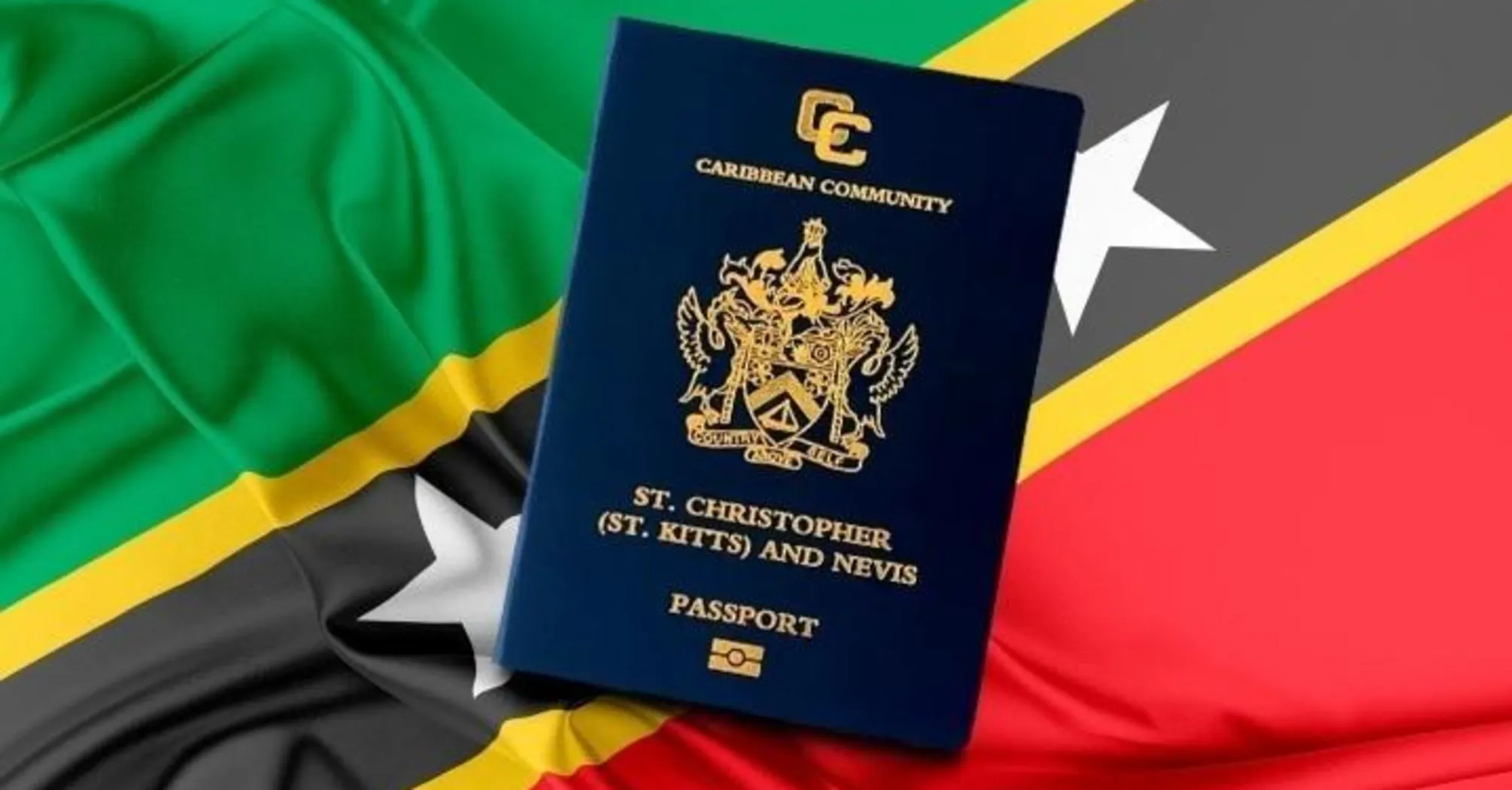
What the route delivers is a legally straightforward mechanism: the applicant makes a one-time contribution to the SISC fund, the CIU conducts due diligence, the government approves the application, and the applicant receives a Certificate of Citizenship and a St Kitts and Nevis passport. There is no residency requirement before, during, or after approval. The applicant does not need to visit St Kitts at any stage. The passport is issued with a 10-year validity and is renewable from any jurisdiction without a visit requirement.
Cost Breakdown: What You Pay and When
Single Applicant
The minimum SISC contribution for a single applicant is USD 250,000. This is the government contribution component only. When professional fees, due diligence charges, and government processing fees are included, the total all-in cost for a single applicant typically falls in the range of USD 290,000 to USD 310,000, depending on the licensed agent and any document preparation complexity specific to the applicant’s nationality or background.
Family of Up to Four at USD 300,000
A family unit of up to four — typically a main applicant, spouse, and two dependant children — can apply jointly under the SISC route for a total contribution of USD 300,000. This makes the per-person cost considerably lower for families with two or three dependants. Children up to age 25 qualify as dependants if they are in full-time education and financially dependent on the main applicant. Parents and grandparents of the main applicant aged 55 or above may also be included as dependants at an additional fee per person, typically USD 25,000 to USD 50,000 depending on nationality profile and due diligence complexity.
Due Diligence, Government Processing and Professional Fees
In addition to the SISC contribution, applicants pay a government due diligence fee of USD 10,000 per adult applicant. A passport fee of USD 500 per person, an administrative fee of USD 1,000 per application, and a certificate of naturalisation fee apply on approval. Professional legal and advisory fees charged by the CIU-licensed agent range from approximately USD 15,000 to USD 25,000 for a single applicant. The total all-in cost for a family of four under the SISC route — including the USD 300,000 contribution, all government fees, and professional fees — typically falls in the range of USD 360,000 to USD 400,000.
SISC All-In Cost Summary
| Cost Item | Amount (USD) |
|---|---|
| SISC contribution — single applicant | 250,000 |
| SISC contribution — family of up to four | 300,000 |
| Government due diligence fee | 10,000 per adult |
| Passport fee | 500 per person |
| Administration fee | 1,000 |
| Professional and agent fees | 15,000–25,000 |
| Estimated total — single applicant | 290,000–310,000 |
| Estimated total — family of four | 360,000–400,000 |
Application Timeline: 45 to 60 Days
The SISC route is the fastest route to a Kittitian passport under the current programme structure. Processing time from full file submission to citizenship approval is 45 to 60 calendar days under the standard track. An accelerated processing option is available for an additional government fee, reducing the timeline to approximately 30 days, though this is rarely necessary except where the applicant is facing a specific deadline such as travel document renewal or family relocation.
The milestone sequence is as follows. File submission to the CIU via a licensed agent marks the start of the official clock. The CIU conducts its internal due diligence review, which typically takes 30 to 40 days. An Approval in Principle (AIP) is issued once the CIU is satisfied with the due diligence outcome. The applicant then pays the SISC contribution and any outstanding government fees. Within 10 to 15 days of payment confirmation, the Certificate of Citizenship and passport are issued. The passport can be mailed directly to the applicant or collected in St Kitts — no visit to the island is required at any stage and neither collection method carries an additional government fee.
The most common cause of delay beyond 60 days is an incomplete file at initial submission: missing source-of-funds documentation, missing or incorrectly certified police clearance certificates, incomplete medical certificates, or incomplete certified translations. A well-prepared file submitted through an experienced licensed agent will typically fall within the 45 to 60 day window without exception.
Due Diligence: What the CIU Evaluates
St Kitts and Nevis operates a four-stage due diligence process that is consistently cited as the most rigorous in the Caribbean CBI market. The CIU screens applicants across four categories: identity verification, criminal record review, financial source-of-funds analysis, and reputational background checks against sanctions lists, PEP (Politically Exposed Person) databases, and adverse media databases. For high-risk nationality profiles, the CIU engages authorised third-party international due diligence agencies to conduct an enhanced secondary screening layer.
Applicants must provide a full source-of-funds declaration supported by audited financial statements or bank confirmation letters covering the preceding three to five years. A clean criminal record is an absolute requirement — any conviction for a serious criminal offence is disqualifying regardless of time elapsed or jurisdiction of conviction. A sealed or expunged record does not automatically resolve the issue; CIU assessors evaluate the underlying facts and circumstances. Applicants from nationalities on the CIU’s restricted list cannot participate in the programme regardless of other qualifications or the quality of their application file.
For UAE-based investors — including UAE nationals and long-term UAE residents — the due diligence process presents no structural obstacles provided the source of funds is clearly documented and the personal background is clean. UAE residency documentation, specifically an Emirates ID, valid UAE residency visa, and UAE bank statements or income documentation, typically satisfies the CIU’s identity and source-of-funds requirements without supplemental documentation. UAE nationals benefit from a well-established track record within the St Kitts programme and are not treated as an enhanced due diligence nationality by default.
Visa-Free Travel on a Kittitian Passport
A St Kitts and Nevis passport provides visa-free or visa-on-arrival access to 167 countries. Key destinations include the full Schengen Area (27 European countries), the United Kingdom, Singapore, Hong Kong, Brazil, and all CARICOM member states. The passport does not provide visa-free access to the United States, Canada, or Australia — all three require a separate visa application — but the European and Asian reach is materially stronger than most Caribbean alternatives at equivalent price points.
The SIDF Route: Why SISC Replaced It
The Sugar Industry Diversification Foundation (SIDF) was the original donation vehicle for St Kitts and Nevis citizenship, established in 2006 to fund agricultural diversification projects following the closure of the sugar industry. The SIDF route was restructured and operationally wound down in 2023 when the Sustainable Island State Contribution was introduced. The SIDF is no longer the active donation mechanism under the current programme structure. Applicants seeking the donation route should proceed exclusively under SISC.
The SISC was introduced with a clearer policy mandate — environmental and economic resilience infrastructure — which also carries a stronger reputational profile for applicants whose source-of-funds documentation may be reviewed by their home country tax authorities or correspondent banking relationships. Advisers and agents who reference the SIDF as a current active route are operating on outdated programme knowledge.
Comparing St Kitts to Other Caribbean Donation Programmes
Four Caribbean programmes currently offer an active donation citizenship route: St Kitts and Nevis, St Lucia, Grenada, and Dominica. The headline contribution differential is material. Dominica starts at USD 200,000 for a single applicant — the lowest cost Caribbean donation option. Grenada starts at USD 235,000. St Lucia at USD 240,000. St Kitts at USD 250,000 carries the highest headline contribution of the four.
The premium is justified on two grounds: due diligence depth and passport access stability. St Kitts operates the longest-established CBI programme globally (since 1984) with the most extensive track record of international scrutiny. Receiving countries — including the United Kingdom and Schengen-area states — evaluate passport access policies partly on the basis of due diligence standards in the issuing country. The St Kitts programme’s 40-year track record substantially reduces the risk of access restrictions or visa waivers being suspended for Kittitian passports relative to newer Caribbean programmes. The passport is also accepted by a wider range of correspondent banks and financial institutions for account-opening purposes.
Grenada’s programme carries one structural feature St Kitts does not: an active E-2 Treaty Investor Visa arrangement with the United States, which allows Grenadian citizens to apply for a US E-2 investor visa at lower capital requirements than the EB-5 green card route. For investors with a specific interest in US business access, Grenada may be more appropriate despite a lower due diligence standard. For investors focused on European and Asian mobility with the strongest-reputation Caribbean passport, St Kitts remains the reference point in the market.
UAE Investors and Dual Nationality
UAE law permits UAE nationals to hold foreign citizenship under a policy framework enacted in 2021. Under that framework, UAE citizens may hold the citizenship of a second country without it affecting their UAE citizenship status, provided the acquisition does not conflict with UAE national security provisions. Caribbean citizenship by investment programmes — including St Kitts and Nevis — are not categorised as restricted under the UAE’s published dual nationality framework. UAE nationals have successfully applied for and held Kittitian citizenship alongside UAE citizenship without legal complication.
UAE residents who are not UAE nationals can acquire St Kitts citizenship without any impact on their UAE residency status. UAE residency is a visa classification, not a nationality designation, and there is no UAE provision that ties residency to single-nationality status. Indian nationals should note that Indian law does not permit dual citizenship: acquiring St Kitts citizenship requires surrendering the Indian passport. This is a permanent consequence requiring specialist legal advice before any application. For investors comparing Caribbean citizenship with UAE long-term residency options, see the UAE Golden Visa.
Frequently Asked Questions: St Kitts Citizenship by Donation
Is the SISC contribution refundable if my application is rejected?
In the event of a rejection on due diligence grounds, the government contribution is typically refunded. Processing fees paid to the CIU and professional fees charged by the licensed agent are not refundable. The contribution should be structured as a fee for citizenship, not an investment with a recovery mechanism in all outcomes.
Do I need to visit St Kitts at any point during the application?
No. The SISC route has no visit requirement at any stage. The application is processed entirely through the licensed agent. The passport is issued on approval and can be delivered by international courier. Some applicants choose to collect the passport in person; that option is also available. There is no post-citizenship residency or visit requirement.
Does St Kitts citizenship pass to children born after approval?
Yes. Children born to a Kittitian citizen after citizenship is granted acquire citizenship of St Kitts and Nevis by descent automatically. Citizenship is heritable and extends to future generations — a material structural advantage of citizenship programmes over residency-based programmes, where children born after the parent’s residency approval do not automatically receive residency status.
What are the tax implications of holding St Kitts citizenship?
St Kitts and Nevis has no personal income tax, no capital gains tax, and no inheritance or estate tax. Holding Kittitian citizenship does not create a tax residency obligation in St Kitts — there is no minimum physical presence requirement. For investors tax resident in the UAE, Kittitian citizenship has no effect on UAE tax residency status. Investors tax resident elsewhere should obtain jurisdiction-specific advice before applying.
How Helis Structures the St Kitts Mandate
Helis International structures every St Kitts citizenship mandate around route selection first. For clients without a Caribbean real estate objective — and for UAE-based clients who already hold property in another jurisdiction — the SISC route is the standard recommendation: faster processing, no asset to manage, no seven-year hold to plan around. For clients who want capital recovery alongside citizenship, the St Kitts real estate citizenship places capital into a qualifying development with a seven-year resale window. The route decision shapes the file structure, the documentation requirements, and the timeline. Clients comparing St Kitts alongside other second citizenship and residency programmes can review all active options in the golden visa programmes.