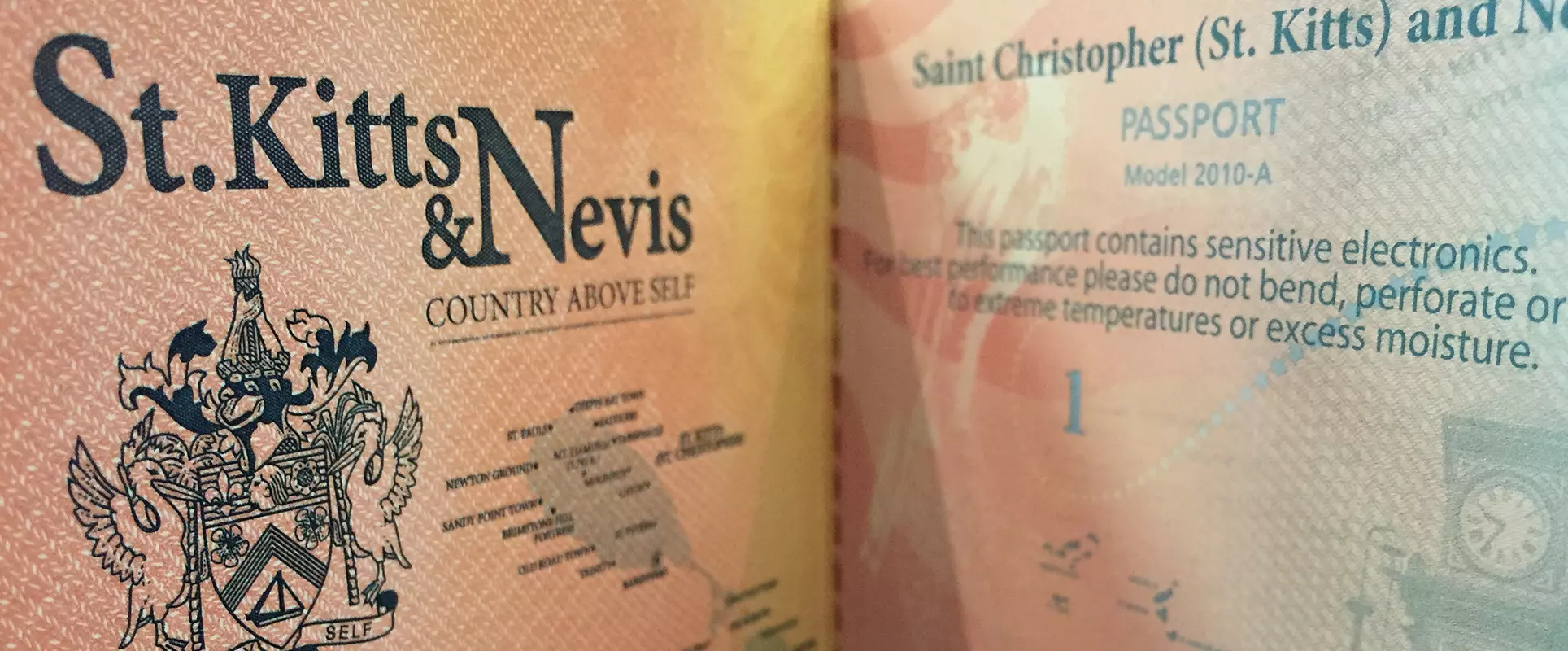
St Kitts and Nevis introduced the world’s first citizenship-by-investment programme in 1984. Over four decades, it has processed applications from investors across more than 160 nationalities, building a due diligence infrastructure and international recognition that no newer programme can replicate. The Citizenship by Investment Unit (CIU), which administers St Kitts citizenship applications, was named Programme of the Year at the Caribbean Investment Summit in 2026.
The core proposition is a second citizenship with no current residency requirement. Holders of a Kittitian passport gain visa-free or visa-on-arrival access to 167 countries, including the full Schengen area, the United Kingdom, Singapore, and Brazil. There is no personal income tax, no capital gains tax, and no inheritance tax.
The programme offers four qualifying investment routes, with thresholds starting at $250,000. The most widely used route is the Sustainable Island State Contribution (SISC), a non-refundable government contribution that scales with family size. A real estate route from $325,000 (reduced from $400,000 in October 2024) also remains active.
For UAE-based investors and Indian nationals evaluating outright second citizenship, with full investment and legal detail on the St Kitts real estate route covered in a dedicated guide, St Kitts citizenship represents the highest-ranked Caribbean option by passport strength and programme integrity. This guide covers the four investment routes, full cost tables, family eligibility, the application process, and how St Kitts compares to other Caribbean CBI programmes.
Why St Kitts and Nevis Leads the Caribbean CBI Market
40 Years of Programme Precedent
No Caribbean citizenship programme has operated continuously for longer. St Kitts launched its CBI framework four decades before Dominica, Grenada, Antigua, and St Lucia entered the market. That history created two structural advantages: a deep pipeline of approved legal counsel, licensed agents, and due diligence firms globally, and a passport that has been tested against diplomatic scrutiny repeatedly and maintained its visa-free access throughout.
The CIU operates a multi-tier due diligence system. Every applicant undergoes background checks from at least two independent licensed agencies before a file reaches the approval stage. The processing target for standard applications is 45 to 60 working days from submission, though the full timeline from agent engagement to passport issuance typically runs four to six months.
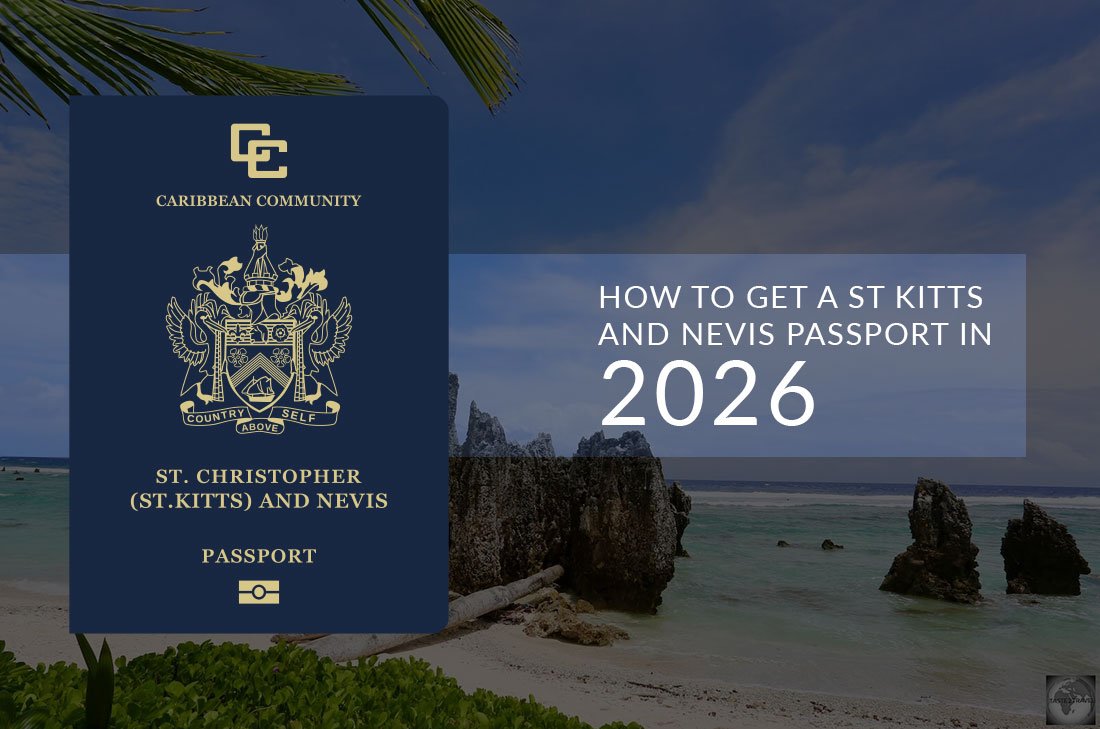
In April 2026, St Kitts citizenship processing introduced mandatory biometric registration for all applicants. New ePassports aligned with international ICAO standards are issued from July 2026.
The significance of St Kitts citizenship’s due diligence record is practical, not ceremonial. Schengen member states and the United Kingdom periodically review whether Caribbean CBI passports should be subject to additional visa controls. St Kitts has consistently remained on the visa-free list for both regions, a result that reflects confidence in its vetting standards. Programmes that have faced temporary Schengen suspension (as certain Caribbean programmes did in 2018) carry a reputational risk that St Kitts has not faced since the AAP was closed in 2016.
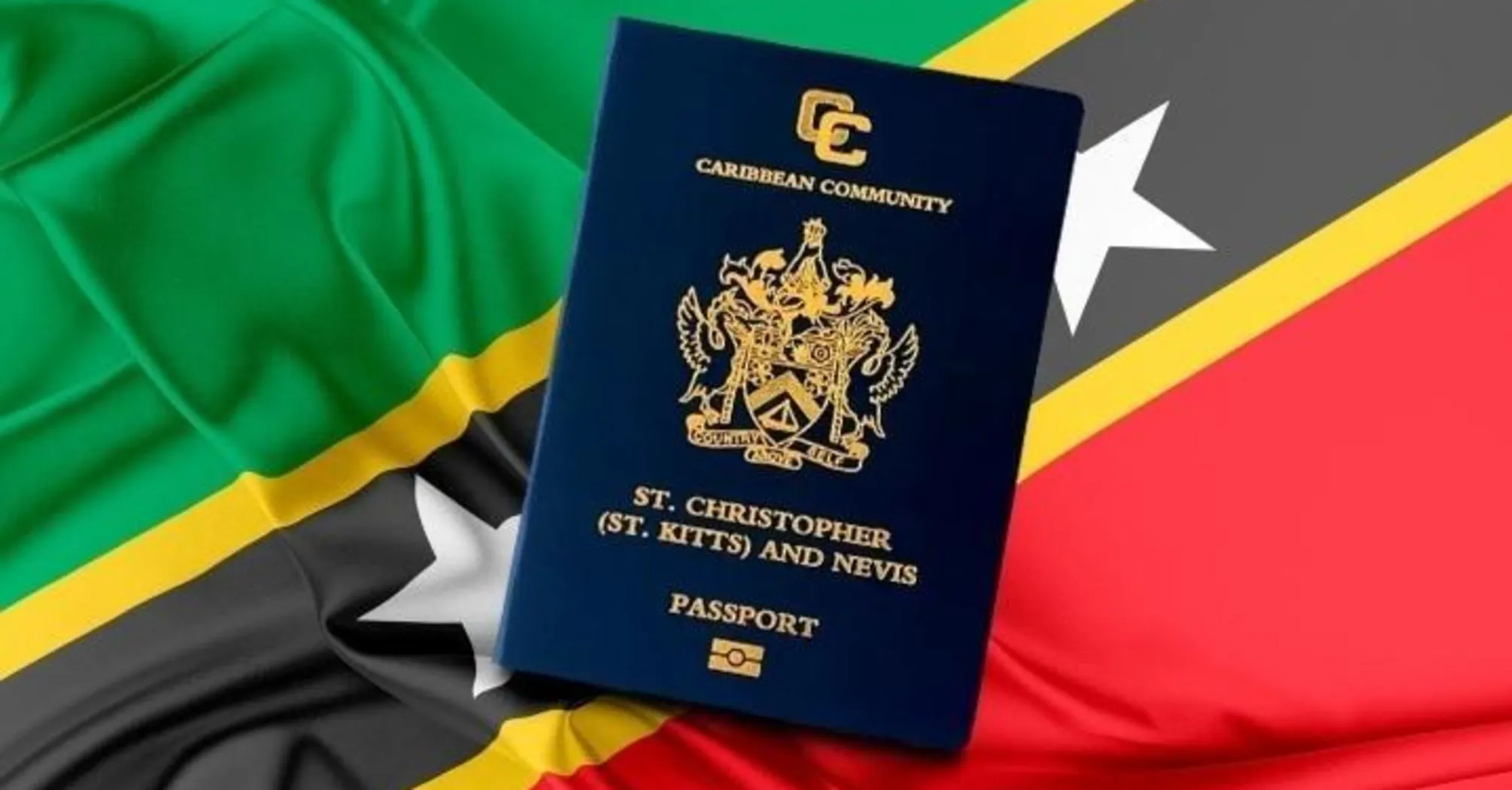
Passport Strength: 167 Visa-Free Destinations
The Kittitian passport provides visa-free or visa-on-arrival access to 167 countries. Key markets include the full Schengen area (27 countries), the United Kingdom, Singapore, Brazil, and Taiwan. The passport consistently ranks among the top five Caribbean-issued documents by visa access count, ahead of Dominica (144), Grenada (140), Antigua (151), and St Lucia (148).
For investors holding an Indian passport, St Kitts citizenship removes Schengen visa requirements, which currently require advance applications and appointment bookings. For UAE residents, the Kittitian passport functions as a secondary travel document and provides access to markets where the UAE passport requires a pre-arranged visa.
Zero Tax on Income, Capital Gains and Inheritance
St Kitts and Nevis does not levy personal income tax, capital gains tax, inheritance tax, or wealth tax. Residents are not required to file annual personal tax returns unless they have locally sourced income above the filing threshold.
Citizenship alone does not create tax residency in St Kitts. Investors who hold a Kittitian passport but reside in the UAE or India remain tax-resident under their existing frameworks. The tax profile becomes structurally significant when investors relocate to St Kitts or use it as a primary residency, particularly for those managing offshore investment portfolios or cross-border income.
Four Investment Routes and Qualifying Thresholds
The programme offers four qualifying routes. All routes are subject to the same due diligence fees, passport fees, and processing fees regardless of which route is chosen. Investment thresholds are set in US dollars and are fixed by the CIU.
SISC: From $250,000
The Sustainable Island State Contribution (SISC) is a non-refundable government contribution directed toward seven national development priorities, including healthcare infrastructure, education, green energy, and social development programmes. It is the most widely used route and imposes the lowest entry cost for a single applicant.
Minimum thresholds by family configuration:
- Single applicant: $250,000
- Married couple (main applicant and spouse): $300,000
- Main applicant, spouse, and up to two children under 18: $350,000
- Each additional dependent adult (aged 18 to 30 or parent aged 55+): $75,000
The SISC does not require a property purchase or fund investment and carries no secondary due diligence on an underlying asset, which simplifies the file and keeps processing predictable. For full costs, due diligence detail and processing timeline on the SISC route, see the St Kitts donation citizenship guide.
Developer’s Real Estate: From $325,000
This route requires a minimum purchase of $325,000 in a CIU-approved development project. The threshold was reduced from $400,000 in October 2024, making the route more accessible for investors who prefer a tangible asset alongside citizenship. Approved developments are typically hotel-resort units or residential projects operating within the CIU’s active project register.
Key conditions: the property must be held for a minimum of seven years. Resale to another eligible CBI applicant after the hold period does not affect the citizenship already granted. Investors seeking rental yield from an approved resort unit can do so during the hold period through the developer’s rental programme.
Private Real Estate: $600,000
The private real estate route allows investors to purchase a property not listed under the approved developer scheme. The minimum is $600,000, and the same seven-year hold period applies. This route suits investors seeking a personal-use villa or private residence in St Kitts or Nevis rather than a hotel or resort unit. Properties on the approved list of designated areas qualify; the agent confirms which areas apply at the time of instruction.
Nevis, the smaller of the two islands, is particularly popular with investors seeking privacy and a lower-density environment. Nevis Peak, the island’s 985-metre dormant volcano, and the Four Seasons Resort Nevis are among the most recognised features of the island’s property landscape. The Four Seasons development itself qualifies as an approved project under the developer route, making Nevis accessible under both the $325,000 and the $600,000 thresholds depending on the property type selected.
Public Benefit Option: From $250,000
The Public Benefit Option (PBO) routes contributions toward specific government-approved national projects distinct from the SISC allocation. The minimum contribution is $250,000. The CIU designates eligible PBO projects periodically. This route is structurally similar to the SISC but is directed toward discrete infrastructure or public benefit categories as designated by the government at the time of application.
Full Cost Breakdown
The total cost of St Kitts and Nevis citizenship includes the qualifying investment plus mandatory government fees. The fees below apply to all routes and all family configurations and are set by the CIU.
Government Fees and Due Diligence
- Due diligence fee: $10,000 per main applicant; $7,500 per dependant aged 16 and over
- Passport fee: $350 per person
- Application processing fee: $250 per person
Professional fees charged by licensed agents and legal counsel are separate from government fees and are not standardised. Typical advisory and legal fees range from $15,000 to $30,000 depending on family complexity and the agent’s structure. Investors should request an itemised fee schedule from any agent before engaging.
Total Cost by Family Configuration (SISC Route)
| Configuration | SISC Contribution | Due Diligence | Passport + Processing | Estimated Total |
|---|---|---|---|---|
| Single applicant | $250,000 | $10,000 | $600 | $260,600+ |
| Married couple | $300,000 | $17,500 | $1,200 | $318,700+ |
| Couple + 2 children under 16 | $350,000 | $17,500 | $2,400 | $369,900+ |
| Couple + 2 adults over 16 | $350,000 | $32,500 | $2,400 | $384,900+ |
Professional fees are additional and typically represent $15,000 to $30,000 of the overall outlay. The developer real estate route adds $325,000 as a capital outlay but creates a recoverable asset held for seven years, distinguishing it from the non-refundable SISC contribution.
Eligibility, Family Inclusion and Restricted Nationalities
Who Qualifies as Main Applicant
Any individual aged 18 or over, not a national of a restricted country, and with a clean criminal and financial background may apply as main applicant. There is no minimum income requirement, no language test, and no requirement to have previously visited St Kitts or Nevis. The programme is open to all qualifying nationalities on an individual-file basis.
Eligible Dependants
The main applicant may include the following dependants in a single application:
- Spouse (legally married)
- Children under 18
- Children aged 18 to 30 who are enrolled in full-time education or who are financially dependent on the main applicant
- Parents or grandparents of the main applicant or spouse aged 55 or over, provided they are financially supported by the applicant
Siblings are not eligible as dependants under current rules. Dependants added to the original application receive citizenship simultaneously. Adding dependants after the initial grant is possible under a separate process.
Restricted Nationalities
The following nationalities are subject to an absolute bar and cannot apply under any circumstances: Iran, Afghanistan, North Korea, Belarus, Cuba, Russia. Applications from nationals of these countries are refused at intake regardless of investment route or personal background.
Nationals of certain other countries are subject to enhanced due diligence requirements. These are assessed by the CIU on a case-by-case basis and do not automatically preclude an application from proceeding.
Proposed Residency Requirement: Not Yet in Effect
As of the date of this article, there is no residency requirement to maintain or renew St Kitts and Nevis citizenship once granted. A minimum physical presence of 30 days within any five-year period has been discussed at the legislative level and was under active consultation in 2025 and 2026. This requirement had not been enacted into law at the time of writing.
Investors evaluating St Kitts citizenship should confirm the current position directly with the CIU or a licensed agent before making an investment decision. Helis will flag any enacted changes as part of the consultation process.
Application Process and Timeline
Step-by-Step Application
The CIU requires that all applications be submitted through a CIU-authorised person or entity. The following stages apply across all investment routes.
Step 1: Agent engagement. Select and formally instruct a CIU-licensed agent. The agent manages documentation preparation, performs an initial file review, and submits to the CIU on the applicant’s behalf.
Step 2: Document preparation. Standard requirements include a certified copy of all passport pages, police clearance certificates from every country of residence in the past ten years, a bank reference letter, source-of-funds declaration, completed CIU application forms, and biometric data.
Step 3: CIU submission. The agent files the completed application digitally. A file reference number is issued on receipt, confirming the application is under review.
Step 4: Due diligence review. The CIU engages independent background-check agencies. This stage takes four to eight weeks for files without complications.
Step 5: Approval in principle. The CIU issues a conditional approval. At this stage, the qualifying investment is completed: the SISC contribution is transferred or the real estate purchase is completed.
Step 6: Biometric enrolment. From April 2026, all applicants must provide biometrics at an approved enrolment centre. The CIU has enrolment facilities in several countries, including the UAE and India.
Step 7: Passport issuance. ePassports are produced under the updated ICAO-aligned format from July 2026 and dispatched to the applicant or agent.
Processing Times
Standard processing from complete submission to passport issuance runs four to six months. Files with complex backgrounds, additional due diligence requests, or incomplete documentation may take longer. The Accelerated Application Process (AAP), which offered a faster processing track, was discontinued in 2016 and is no longer available under any circumstances.
St Kitts vs Other Caribbean CBI Programmes
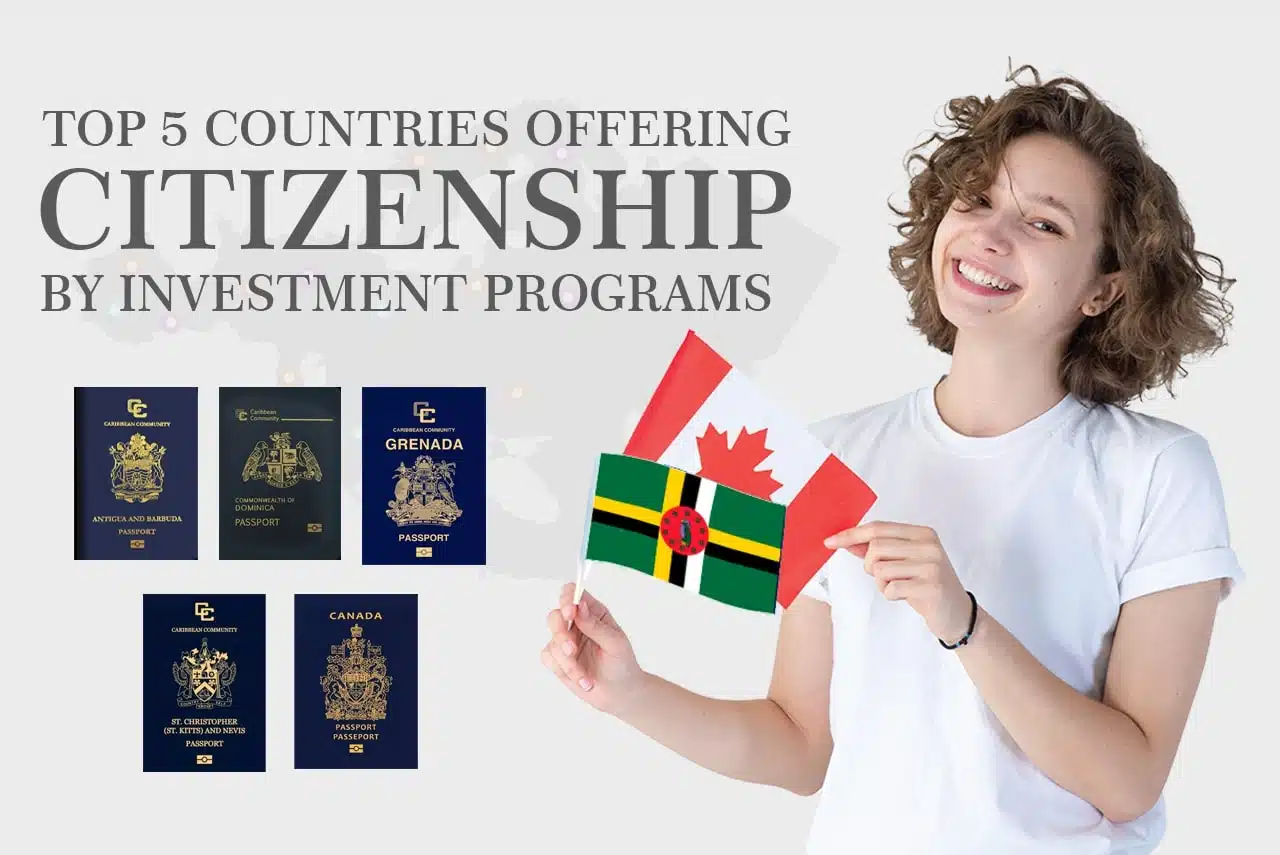
Five jurisdictions currently offer Caribbean citizenship by investment: St Kitts and Nevis, Dominica, Grenada, Antigua and Barbuda, and St Lucia. Each has a different minimum investment, processing timeline, visa-free count, and unique programme feature that affects suitability depending on investor objectives.
| Programme | Minimum Investment | Typical Timeline | Visa-Free Countries | Distinct Feature |
|---|---|---|---|---|
| St Kitts and Nevis | $250,000 | 4-6 months | 167 | Oldest programme; highest due diligence standard |
| Dominica | $200,000 | 3-4 months | 144 | Lowest cost in the Caribbean |
| Grenada | $235,000 | 3-4 months | 140 | US E-2 treaty access |
| Antigua and Barbuda | $230,000 | 3-5 months | 151 | 5-day residency requirement in first 5 years |
| St Lucia | $240,000 | 3-4 months | 148 | Government bonds route available |
The cost differences across the five programmes are relatively narrow: the gap between the cheapest (Dominica at $200,000) and St Kitts ($250,000) is $50,000, a meaningful but not decisive figure at the investment levels typical of this applicant pool. The more material differences are in visa-free access (23-country spread from bottom to top), processing speed, due diligence rigour, and unique features such as Grenada’s E-2 treaty.
When St Kitts Is the Right Choice
St Kitts suits investors for whom passport credibility and visa-free access are the primary objectives. The 167-destination count is the highest in the Caribbean. The programme’s 40-year track record means the passport is recognised and trusted across Schengen countries, the UK, Singapore, and other jurisdictions where newer Caribbean passports may face informal scrutiny at consular level.
Investors who value process rigour also tend to prefer St Kitts: the multi-tier due diligence system means a Kittitian citizenship carries a lower reputational risk in the eyes of third-country immigration authorities than programmes operating lighter background-check requirements.
When Grenada Makes More Sense
Grenada is the only Caribbean CBI programme whose holders are eligible to apply for a US E-2 investor visa. For investors with active US business interests who cannot access E-2 through their primary nationality, Grenada citizenship provides a route to a two-year renewable US business presence visa. St Kitts does not have a US E-2 treaty.
Investors with specific US access requirements should evaluate Grenada alongside St Kitts based on their individual brief rather than defaulting to either programme. Both are well-established, and the choice typically comes down to whether E-2 eligibility or passport strength and programme tenure is the higher priority.

Tax Efficiency and Global Mobility Planning
The Tax Position for Indian and UAE-Based Investors
Indian nationals are taxed on worldwide income under Indian tax law, with the residency threshold based on physical presence in India. UAE residents currently benefit from a zero personal income tax environment, making the UAE a structurally efficient base for internationally mobile investors. A St Kitts passport does not change the investor’s existing tax residency by itself.
What citizenship changes is optionality: the investor gains a second passport with a zero-tax fiscal profile available if they choose to relocate or restructure their tax base. For families dividing time between the UAE, India, and Europe, a Kittitian passport removes Schengen visa requirements and allows unplanned travel to 167 countries without advance planning.
Dual Citizenship and Indian Nationality Law
St Kitts and Nevis permits dual and multiple citizenship. Applicants do not renounce their existing citizenship as part of the St Kitts CBI process.
Indian citizenship law, however, does not permit dual citizenship: Indian nationals who acquire St Kitts citizenship are required to surrender their Indian passport under the Citizenship Act 1955. Many Indian investors address this by planning the St Kitts application as a long-term instrument for children born or raised outside India, who may benefit from EU and Schengen access in the next generation. UAE nationals should confirm their own country’s dual citizenship position with a licensed adviser before applying.
From a wealth planning perspective, the combination of a UAE Golden Visa (providing UAE residency status) and a St Kitts passport (providing a second citizenship with a zero-tax profile) is one of the more structurally efficient configurations for globally mobile investors. The UAE provides legal presence, a banking jurisdiction, and access to DIFC-based financial institutions. St Kitts provides a second citizenship that functions independently of the UAE residency: it is not tied to the UAE property investment and does not expire if the UAE Golden Visa lapses.
St Kitts Citizenship: Frequently Asked Questions
What is the minimum investment for St Kitts citizenship?
The minimum investment for St Kitts citizenship via the SISC route is USD 250,000 for a single applicant with up to three qualifying dependants. The real estate route requires a minimum of USD 325,000 for a government-approved condominium development; a single-family private dwelling requires USD 600,000. Government fees and due diligence charges apply on top of the investment threshold regardless of route.
Is there a residency requirement for St Kitts citizenship?
No. There is no mandatory residency requirement for St Kitts citizenship under current programme rules. Applicants are not required to visit the islands during the application process, though a Certificate of Registration must be collected in person or at a CIU-designated consulate after approval. A proposed residency amendment has been discussed but has not been enacted as of mid-2026.
Can Indian nationals apply for St Kitts citizenship?
Indian nationals are eligible to apply, but Indian law does not permit dual citizenship. An Indian passport holder who acquires St Kitts citizenship must renounce their Indian passport. OCI (Overseas Citizen of India) cardholders retain OCI status regardless of passport held. Indian applicants should obtain formal legal advice on renunciation sequencing before submitting any CBI application, as timing affects visa access during the transition period.
How long does the St Kitts citizenship application take?
The St Kitts citizenship SISC route processes in approximately 45 to 75 days from complete application submission. The real estate route timeline depends partly on the chosen development’s construction and approval schedule. A mandatory due diligence interview is conducted virtually or in person for all applicants. The CIU does not guarantee processing windows and may extend review periods for complex family configurations or elevated-risk nationalities.
Which family members can be included in the application?
St Kitts citizenship can extend to a spouse, children under 30 (including financially dependent students), parents or grandparents aged 55 or over who are financially dependent on the main applicant, and unmarried siblings who are financially dependent. Dependants can be added to an existing St Kitts citizenship after the initial grant, subject to supplementary government and due diligence fees.
What is the seven-year lock-in on the real estate route?
Applicants who acquire St Kitts citizenship through the real estate route must hold the qualifying property for a minimum of seven years before selling. The property can be rented during the holding period. Selling before the seven-year threshold does not affect the citizenship already granted, but the proceeds cannot be used to qualify a new application under the real estate route for a different programme.
Are there nationalities that cannot apply for St Kitts citizenship?
Current St Kitts citizenship restrictions exclude nationals of Afghanistan, Iran, Iraq, North Korea, Somalia, Sudan, South Sudan, Syria, and Yemen. Russian and Belarusian nationals face enhanced due diligence requirements and extended processing timelines under current CIU policy. These restrictions are reviewed periodically and can change. Applicants from affected nationalities should confirm current eligibility with an authorised agent before proceeding.
What does St Kitts citizenship mean for UAE residents on tax?
St Kitts and Nevis imposes no personal income tax, no capital gains tax, no inheritance tax, and no wealth tax. For UAE-based investors who already hold UAE residency, St Kitts citizenship adds passport mobility without creating new tax exposure. St Kitts does not impose minimum-stay requirements that would trigger tax residency obligations on the islands, and holding a Kittitian passport does not affect UAE tax residency status provided the investor continues to satisfy UAE residency conditions.
How Helis Guides the St Kitts and Nevis Application
Helis provides independent structuring guidance for investors evaluating St Kitts and Nevis alongside other residency and citizenship programmes. The process begins with an investor profile review covering current passport, family configuration, timeline, budget, and whether outright citizenship or a residency programme such as the Portugal Golden Visa or the UAE Golden Visa better fits the brief.
For St Kitts specifically, Helis assists with agent selection, documentation sequencing, source-of-funds positioning, and the practical logistics of biometric enrolment for UAE-based clients. The St Kitts programme integrates naturally with a Dubai property position at or above AED 2 million, which qualifies the investor for the UAE Golden Visa in parallel.
Investors evaluating the full spectrum of golden visa programmes across Europe, the Caribbean, and the Pacific can review all active options using the Helis Investor Decision Toolkit, available on the golden visa programmes hub page.
For a direct consultation on St Kitts and Nevis citizenship or to compare it with other active Caribbean or European programmes, contact the Helis team.