Global mobility 2026 is no longer defined by convenience or short-term opportunity. It has become a strategic pillar of wealth planning, family security, and long-term global positioning. For high-net-worth families, the question is no longer whether to diversify residency options, but how to do so in a way that preserves capital, protects future generations, and enhances lifestyle freedom across borders.
As geopolitical shifts accelerate, tax regimes evolve, and cross-border movement becomes more regulated, families are reassessing where they live, invest, and establish long-term roots. Residency decisions made today increasingly determine access to education, healthcare, business opportunities, and generational stability. The families that approach this systematically — rather than reactively — are the ones who retain optionality when conditions change. The choice between residency vs citizenship investment is foundational to how that structure is built.
Long-Term Residency as a Strategic Portfolio Asset
The most significant shift in global mobility 2026 is the transition from temporary visa arrangements to long-term strategic residency planning. Short-term solutions may offer flexibility on paper, but they introduce a form of operational risk that most high-net-worth families underestimate — the risk of disruption to children’s schooling, business continuity, healthcare access, and estate planning at precisely the moments when stability matters most.
Why Temporary Visa Structures No Longer Serve HNW Families
The traditional model — obtain a business visa, renew annually, manage compliance piecemeal — has become increasingly unworkable for families operating across multiple jurisdictions. Regulatory changes in key markets over the past three years have shortened renewal windows, tightened eligibility criteria, and introduced new substance requirements that catch families unprepared. A family relying on an annual business visa for access to a jurisdiction where their children attend school or where a parent holds a board seat is carrying avoidable operational risk. Multi-year or permanent residency frameworks remove that dependency entirely.
UAE Golden Visa — The Benchmark for Investment-Linked Long-Term Residency
The UAE Golden Visa has become the reference point against which other investment-linked residency programmes are now measured. The 10-year renewable residency requires a minimum AED 2 million property investment — which can be off-plan — and carries no employer sponsorship requirement, no minimum stay obligation, and full family sponsorship rights for spouse, children, and domestic staff. The programme has no income tax at the personal level, and UAE corporate tax applies only to profits above AED 375,000 annually. For Indian, European, and GCC investors already deploying capital into Dubai property, the Golden Visa is effectively a residency dividend on an investment they are making regardless.
In 2024, the UAE also extended Golden Visa eligibility to investors in approved public funds, entrepreneurs with validated projects, and professionals in priority sectors including healthcare, technology, and education. The programme has matured significantly from its 2019 launch, and its breadth in 2026 makes it the most flexible long-term residency option in the Gulf region by a considerable margin.

The no-stay advantage and family sponsorship scope
Unlike European investment residency programmes, which typically require a minimum stay of seven to ninety days per year to maintain permit validity, the UAE Golden Visa imposes no stay requirement. A family based primarily in India, the UK, or Singapore can hold UAE Golden Visa status without making a single visit in a given year and the permit remains valid. This makes it uniquely suited to families who want legal residency as a structural asset — access to UAE banking, business registration, and education — rather than a commitment to physical relocation.
Investors benchmarking the UAE property residency route against Greece, Portugal, Malta, and Singapore will find a full pre-decision comparison — investment thresholds, stay obligations, EU access rights, and citizenship pathways — in our UAE residency by property investment (RBI) analysis.
Portugal and Malta as EU Access Points
For families requiring European Union access, Portugal and Malta remain the two most structured pathways. Portugal’s investment residency programme — restructured in 2024 to focus on fund investments and away from direct property — requires a minimum €500,000 qualifying investment in approved venture or private equity funds, with fund eligibility criteria and CMVM-regulated categories detailed in our Portugal Golden Visa investment guide. Residency permits are renewable every two years with a minimum stay of seven days per year, and the pathway to Portuguese citizenship opens after five years. Portugal’s tax regime for new residents, the IFICI programme (successor to the NHR scheme), offers a 20% flat tax on Portuguese-source income for a ten-year period, which remains a significant draw for professionals and entrepreneurs relocating from high-tax European jurisdictions.
Malta’s MRVP — the Malta Permanent Residence Programme — offers a different structure: a €150,000 government contribution, a property purchase of at least €375,000 (or €14,000 annual rental), and an annual fee of €5,500 thereafter. The result is permanent EU residency with the right to move and reside across Schengen. For families where EU access is the primary driver but emigration from the home country is not intended, Malta’s programme offers permanent residency without a citizenship timeline — useful where dual citizenship creates complications in the home jurisdiction.

Jurisdictional Diversification — Managing Geopolitical and Tax Concentration Risk
Just as prudent investors diversify assets across classes and geographies, families are increasingly diversifying across jurisdictions. Relying on a single country for residence, taxation, and legal protection exposes the family unit to a single point of policy failure. Tax law changes, capital controls, political instability, and currency devaluation all represent jurisdiction-specific risks that can be structurally mitigated through diversified residency positioning. A multi-jurisdictional structure does not require physical relocation — it requires legal positioning that creates optionality before it is needed.
The Single-Jurisdiction Concentration Problem
The concentration risk is more acute than most families realise until a triggering event occurs. A business family whose primary residence, operating companies, real estate portfolio, and children’s education are all anchored to a single jurisdiction faces a correlated risk profile — a policy change in that one country affects all of these simultaneously. This is the problem that global mobility 2026 is designed to solve at the structural level: creating optionality and separation between where a family lives, where its assets are held, where its businesses operate, and where its children are educated.
How to Structure a Two or Three-Jurisdiction Residency Portfolio
The most effective approach for HNW families is a primary-secondary-tertiary residency framework. The primary jurisdiction is where the family spends most of its time and where the majority of tax residency is established. The secondary jurisdiction provides an alternative that can be activated during periods of instability in the primary — ideally one with different geopolitical risk characteristics and a different regulatory regime. The tertiary position, often a Caribbean or Pacific citizenship-by-investment programme, provides an emergency travel document and a third legal status that exists entirely independently of the family’s primary ties.
A common structure for Indian business families in 2026 combines UAE residency (primary, tax efficient, property-linked), Portuguese or Greek residency (secondary, EU access, fund-linked), and a Caribbean citizenship such as Saint Kitts and Nevis (from $250,000 government contribution) or Dominica (from $100,000) as a third position that stands entirely independently. This structure creates genuine mobility and legal redundancy without requiring the family to abandon its primary home market ties.

Jurisdictions That Pair Well With UAE Residency in 2026
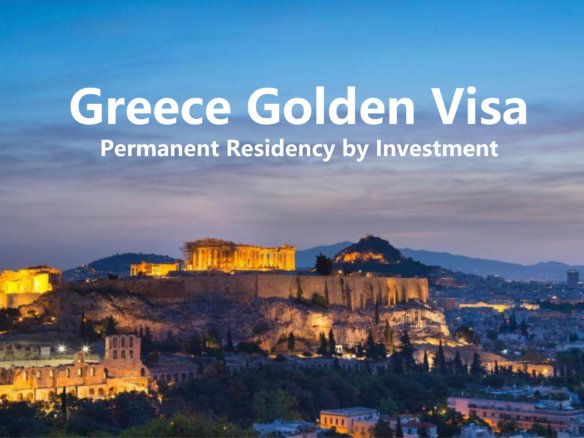
For families anchored in Dubai, the natural secondary pairings depend on purpose. EU access points toward Portugal, Malta, or Greece — Greece having raised its minimum investment threshold to €800,000 in Athens and other prime zones, while maintaining €250,000 in lower-demand regions. Investors specifically evaluating the Greek route will find the full zone breakdown, property structures, and yield analysis covered in our guide to Greece Golden Visa property investment. Business access toward Singapore — though Singapore’s Employment Pass is employment-based and not investment-linked, making it appropriate for executives on regional mandates rather than passive investors. Passport diversification toward Caribbean CBI programmes for families holding passports with limited visa-free access. The selection logic is always purpose-driven: what specific access, protection, or optionality is the secondary position providing that the primary does not?

Residency-by-Investment — Capital Allocation, Not Programme Cost
The most important reframe in investment-linked residency planning is treating programme participation as a capital allocation decision rather than a cost centre. The language of “programme fees” and “contributions” obscures the fact that most qualifying investments — in real estate, approved funds, or bonds — are deployed into assets that either generate income or appreciate in value. The residency right is the incidental benefit of a capital deployment that would, in many cases, be justifiable on investment grounds alone.
Programmes Where the Investment Stands Independently
The UAE Golden Visa is the clearest example: AED 2 million in Dubai property generates rental income at 5% to 8% gross depending on segment and location, and the capital has appreciated materially since the programme launched. The residency is effectively free — the investment earns its own return. Portugal’s fund route requires a €500,000 commitment to a VC or PE fund with a five-year lockup, which, for families already seeking alternative asset exposure, represents a productive allocation rather than a sunk cost. Greece’s property-linked route, where it applies at the lower €250,000 threshold, provides a Schengen residency permit alongside a real estate asset in an actively appreciating market.
The programmes that function purely as cost centres — where the qualifying investment is a non-returnable government contribution with no asset attached — are the Caribbean CBI programmes. Saint Kitts, Dominica, Antigua, Grenada, and Saint Lucia all operate on this model. The logic for using these is different: they are passport acquisition vehicles for families that need a specific travel document rather than asset-linked residency. The cost is explicit and finite — typically $100,000 to $250,000 depending on jurisdiction and family size — and the output is a second citizenship and passport, not a residency permit.

Selecting Jurisdictions With Long-Term Regulatory Stability
The risk that most families underweigh when selecting an investment-linked residency programme is regulatory change risk — the possibility that the programme is modified, suspended, or terminated after investment. Portugal closed its direct property pathway in 2023 precisely because political pressure around housing affordability made it untenable. The UK’s Tier 1 Investor Visa was closed in 2022 with little warning. Selecting programmes with strong sovereign commitment, long track records, and diversified political support reduces — but does not eliminate — this risk. UAE, Malta, and the Caribbean jurisdictions have shown the most durable programme frameworks over the past decade.
Signs of programme durability to assess before committing
For families approaching global mobility 2026 as a structured portfolio decision, three indicators distinguish durable programmes from those at elevated reform risk. First, whether the qualifying investment flows into the broader economy — real estate, approved funds, or job-creating business — rather than into a government contribution alone. Programmes where private capital creates visible economic activity are harder to abolish without political cost. Second, whether the programme has cross-party or constitutional support rather than dependence on a single administration. Third, whether the host government has made the programme a formal element of its inward investment strategy — with dedicated processing infrastructure and ministerial ownership — rather than a discretionary scheme that can be quietly wound down.
Families committing capital to a residency programme are making a five to ten year decision. The regulatory durability of the host jurisdiction is as material to that decision as the initial investment threshold or the quality of the residency permit itself.

Advisory-Led Mobility Planning for Complex Family Structures
Global mobility 2026 has become genuinely complex at the intersection of immigration law, tax treaty networks, estate planning, corporate structure, and real estate. The families who manage this well are not doing so through fragmented, transactional relationships with separate lawyers, accountants, and immigration specialists in each jurisdiction. They are working through integrated advisory frameworks that hold the full picture and coordinate across disciplines.
Why Fragmented Advisory Fails at the HNW Level
The fragmented model produces a specific type of failure: each adviser optimises within their own domain without visibility of the constraints and objectives in adjacent ones. The immigration lawyer secures the residency permit without knowing that the tax adviser is simultaneously restructuring the holding company in a way that creates substance requirements in the new jurisdiction. The estate planner structures the succession without knowing that the children’s new residency creates forced heirship exposure under a different legal system. These are not hypothetical failures — they are recurring patterns in complex family relocations managed without coordination.
The point at which coordination failures become costly
Coordination failures in residency planning rarely surface immediately. They emerge six to eighteen months after the initial structure is established, when a tax filing creates an unexpected liability in the new jurisdiction, when a school enrolment triggers a residency substance question, or when a corporate restructuring generates a deemed disposal event that the immigration adviser was unaware of. By that point, the cost of unwinding is typically three to five times the cost of coordinating correctly at the outset. The complexity is not in the individual jurisdictions — it is in the interactions between them.
Aligning Residency With Education, Legacy, and Generational Continuity
For high-net-worth families, residency decisions have generational consequences that outlast the immediate tax or lifestyle motivation. Where children hold residency and citizenship determines their future optionality: access to universities, professional licences, business ownership rights, and eventual estate exposure in the jurisdictions where they hold status. A child who acquires UAE residency and a Caribbean citizenship alongside their home country passport enters adulthood with a degree of legal mobility that their parents did not have — and that mobility compounds in value over a career and lifetime.
The families that plan for generational continuity — not just the immediate residency solution — are the ones who avoid the remediation costs of unwinding poorly structured positions a decade later. Getting the structure right at the point of planning is materially cheaper and more effective than correcting it after assets, tax residency, and legal ties have been established in the wrong configuration. Helis provides citizenship by investment advisory for HNW families structuring multi-jurisdictional residency and second citizenship.