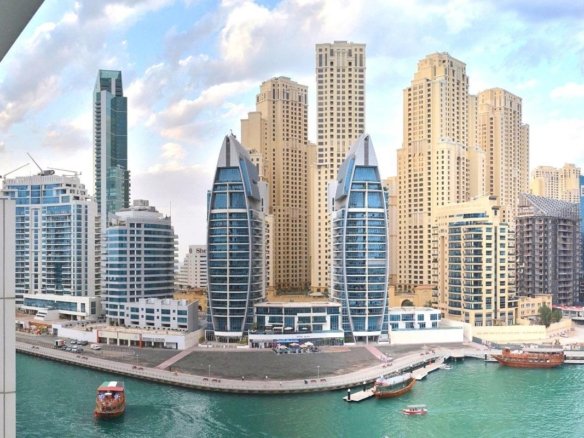
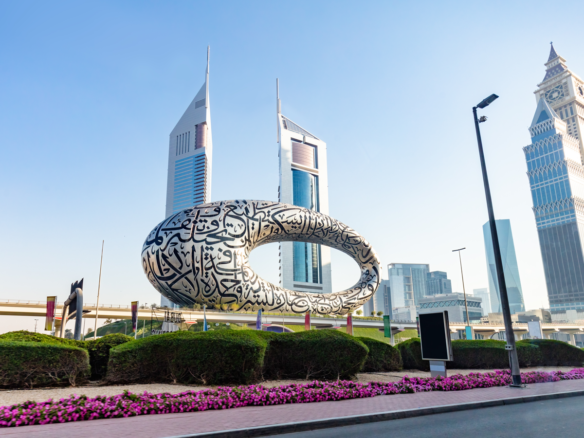
Dubai real estate in 2026 occupies a position in the global investment landscape that few asset classes in any market can match: a market with genuine end-user demand driving price support, a tax structure that preserves the full return on exit, a regulatory framework that has matured significantly since the speculative cycles of the previous decade, and a residency overlay that converts a property purchase into a ten-year legal status for the investor and their family. Understanding how these components interact — and how to structure an entry that captures all of them — is what separates investors who perform well in this market from those who buy on momentum and underperform on exit.
This Dubai real estate guide covers the full investment landscape: what has structurally changed from previous cycles, what the numbers actually look like by segment, how to structure the purchase and financing, what the residency and tax layer delivers, and where the risks that experienced investors consistently underestimate are concentrated.
| Segment | Typical Yield | Typical Buyer | Liquidity |
|---|---|---|---|
| JVC | 7–8.5% | Yield investors | High |
| Business Bay | 6–8% | Investors and end-users | High |
| Dubai Hills | 5–7% | Families | High |
| Palm Jumeirah | 3–5% | HNW buyers | Medium |
| Downtown Dubai | 3–5% | Lifestyle buyers | Medium |
What Makes 2026 Different From Previous Dubai Property Cycles
The Demand Composition Shift
The defining structural change in Dubai’s real estate market over the past four years is not price appreciation — that is the output. The input is a fundamental shift in who is buying and why. Dubai Land Department data for 2024 recorded 180,900 transactions worth AED 761 billion — the highest volume and value ever registered in a single year. The more significant data point is the buyer composition. Growth has been driven disproportionately by end-user purchasers: families relocating to the UAE for primary residence, professionals establishing long-term operational bases, and entrepreneurs structuring their business and personal lives around Dubai as a permanent hub rather than a transit point.
This matters because end-user demand creates a structurally different price floor than speculative demand. Owner-occupier buyers are not selling on sentiment shifts, rate movements in other markets, or portfolio rebalancing decisions. They are buying for schools, healthcare access, community, and quality of life — motivations that do not reverse on a quarterly cycle. The speculative price volatility that characterised Dubai’s 2008 correction and the 2014–2019 trough was a function of an investor-dominated market that moved in lockstep with global risk appetite. The current market is structurally less exposed to that dynamic, which changes the risk profile of a purchase decision made in 2026 relative to those made in prior cycles.
Where Capital Is Concentrating in 2026
Within the broader market, capital is concentrating in two distinct segments that serve different investor profiles but share the characteristic of genuine dual-demand — meaning they attract both end-users and investors simultaneously, which is the condition that produces the most durable price and yield support. The first is integrated villa communities: Dubai Hills Estate, Arabian Ranches 3, Damac Islands, and Emaar South, where families are buying primary residences with school catchment, community infrastructure, and green space as primary criteria. These communities have seen transaction velocity remain high through 2024–2025 precisely because the buyer is replacing rental expenditure with ownership rather than speculating on capital appreciation.
The second concentration is established mid-market apartment corridors — Jumeirah Village Circle, Business Bay, Al Furjan — where investor demand for yield meets tenant demand from the professional population that has relocated to Dubai but is not yet in the ownership market. Vacancy in these corridors ran below 8% through 2024, producing the rental yield outcomes that make Dubai mid-market the most compelling yield-to-risk proposition in the region. Branded residences — Four Seasons, Bulgari, Dorchester Collection — occupy a third niche serving ultra-HNW buyers for whom trophy asset positioning is the primary criterion, with yield secondary. Each of these segments requires a different analytical framework and different entry logic.
Best Areas for Dubai Property Investment
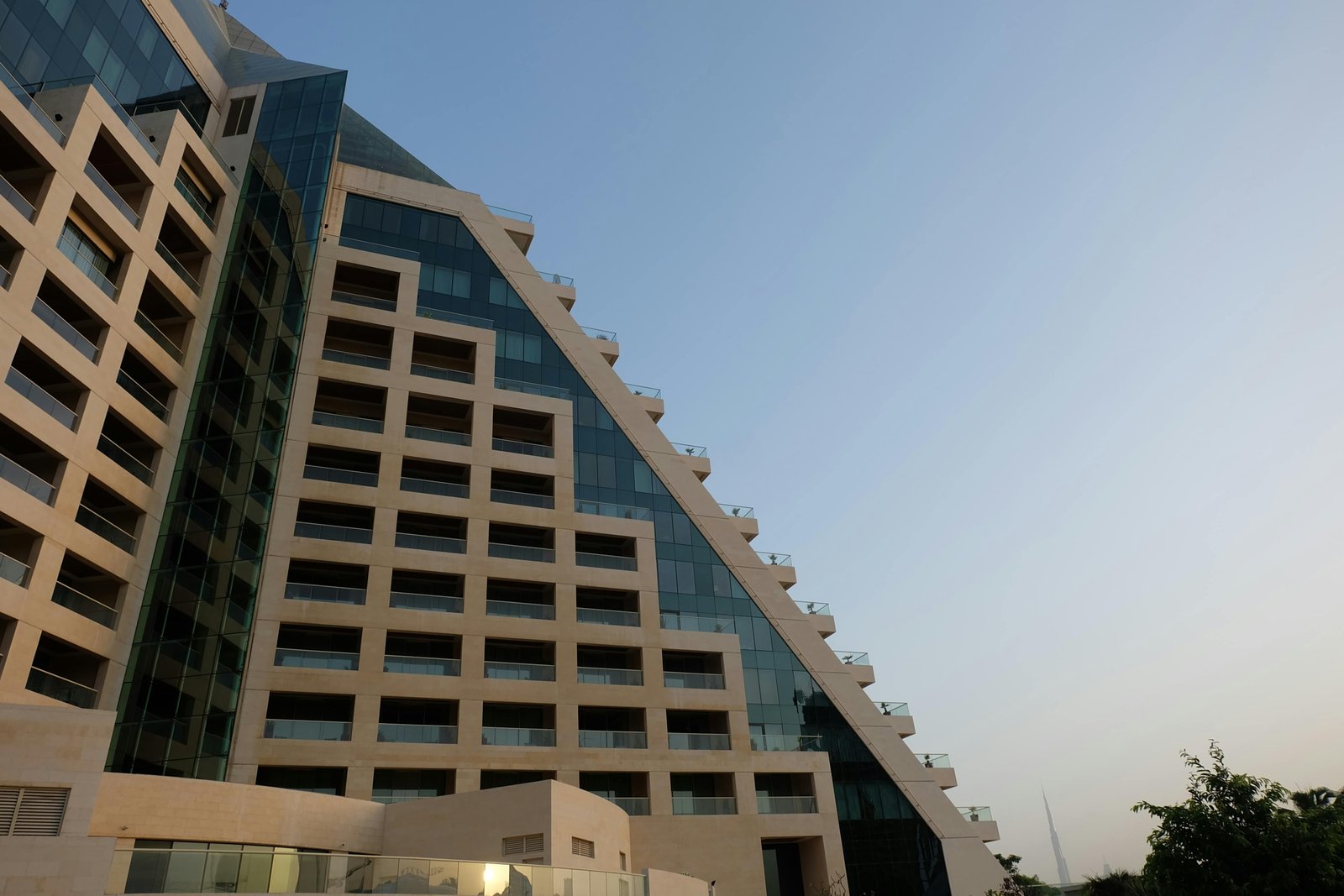
Dubai property investment opportunities are not uniform across the emirate. Corridor selection is the single decision that most reliably determines yield outcome, capital appreciation trajectory, and exit liquidity. The following areas represent the primary investment zones that institutional and private buyers are concentrating capital in across the current cycle.
Jumeirah Village Circle
JVC is the dominant mid-market yield corridor in Dubai, producing gross yields of 7–8.5% on apartments in the AED 900,000–1.2 million range. Vacancy runs below 10%, the tenant profile is young professionals and couples, and the secondary market is liquid with high transaction velocity. For investors prioritising income return over capital appreciation, JVC is the most evidence-supported corridor in the current cycle.
Business Bay
Business Bay occupies the intersection of investor and end-user demand, producing yields of 6–8% and benefiting from proximity to Downtown Dubai and DIFC. The corridor attracts a dual buyer and tenant profile: professionals wanting walkable access to the central business district and investors seeking yield with an established resale market. Liquidity is high and the secondary market is broad enough to support confident exit execution across most holding periods.
Dubai Hills Estate
Dubai Hills Estate is the leading integrated community for family-buyer demand in 2026. Yields of 5–7% on villas and townhouses reflect a buyer population motivated by schools, community infrastructure, and long-term primary residence rather than rental yield alone. Price appreciation has been strong and the resale market benefits from a deep pool of UAE-resident family buyers who provide consistent demand independent of international capital flow conditions.
Al Furjan and Established Mid-Market Corridors
Al Furjan, JLT, and Sports City offer yield profiles comparable to JVC with slightly lower entry prices and vacancy running at similar levels. These corridors suit investors optimising for yield-to-purchase-price ratio who are willing to trade proximity to central Dubai for stronger income returns. Exit liquidity is adequate but narrower than Business Bay or Dubai Hills, making corridor selection more consequential for investors with defined exit timelines.
Palm Jumeirah and Downtown Dubai
Both corridors serve the luxury and trophy-asset segment, with yields of 3–5% and a buyer profile concentrated among ultra-HNW individuals for whom capital preservation and lifestyle access are primary criteria. For Dubai property investment driven by income return, neither corridor competes with mid-market on net yield. Both hold a distinct role in a multi-asset portfolio where residency access, branded asset quality, and capital preservation are weighted alongside return.
The Numbers: Yield, Appreciation, and Total Return
Rental Yield by Segment and Corridor
Gross rental yields in Dubai vary more by segment than most investors new to the market appreciate, and the gap between gross and net — once service charges and management fees are accounted for — is meaningful enough to change the investment case materially. In the luxury segment — Downtown Dubai, DIFC, Palm Jumeirah — gross yields run between 3% and 5%. Service charges in these locations range from AED 30 to AED 55 per square foot annually; on a 2,000 sqft apartment transacting at AED 4,500 per sqft, the annual service charge is AED 60,000–110,000, representing 60–110 basis points of yield compression. After management fees of 8–12% of gross rent, net yields in the luxury segment land between 2.5% and 4%.
| Segment | Gross Yield | Net Yield |
|---|---|---|
| Luxury (Downtown, Palm, DIFC) | 3–5% | 2.5–4% |
| Mid-Market (JVC, Business Bay, Al Furjan) | 7–8.5% | 6.5–7.5% |
| Villa Communities | 4–6% | 3.5–5% |
Mid-market corridors produce materially different results. A one-bedroom apartment in JVC transacting at AED 950,000–1.1 million and renting at AED 75,000–90,000 annually produces a gross yield of 7.5–8.5%. Service charges in JVC run AED 12–18 per sqft — compressing net yield by 60–80 basis points at typical unit sizes. After management fees, net yield lands at 6.5–7.5%. Set against the UK equivalent — where a 7% gross yield on a London buy-to-let produces 3–4% net after income tax at 40–45%, void provision, and letting agency costs — the Dubai mid-market yield is genuinely exceptional on a net, post-cost basis. The UAE levies no personal income tax on rental receipts and no capital gains tax on disposal. The full gross-to-net compression is service charges and management only. For a corridor-by-corridor breakdown of current yield ranges and how supply absorption trends affect the forward return case, see the Dubai property outlook assessment.
Appreciation Trajectory and Total Return Modelling
Prime corridor price appreciation averaged 15–20% per annum across 2022–2024 — a repricing driven by the end-user demand shift described above rather than a sustainable run rate that should anchor forward projections. The more defensible forward assumption for a five-year hold in established mid-market corridors is 5–8% per annum capital appreciation, with prime luxury at 3–5% as the tourist and foreign investor cohort faces increasing competition from new supply in the branded residence segment. These are not guarantees — they are calibrated ranges based on absorption data and supply pipeline analysis, and any sound Dubai real estate guide should make that distinction explicit.
The total return picture is where this Dubai real estate guide makes its strongest empirical case for the mid-market segment. A AED 1.5 million unit generating 7% gross yield, 6.5% net, and 6% annual capital appreciation produces a total annual return of approximately 12–13% before any financing leverage. Over a seven-year hold, with full capital gain retained on exit and no annual tax drag on rental income, the compounding advantage over a structurally equivalent UK or Spanish investment — where income tax and capital gains tax reduce effective return to 6–8% — is significant. The argument for Dubai real estate is not that the assets are better; it is that the structure keeps more of the return in the investor’s hands across every year of the hold period.
Structuring the Entry: Purchase Mechanics and Financing
Direct Freehold Purchase: Costs, Process, and the Off-Plan Decision
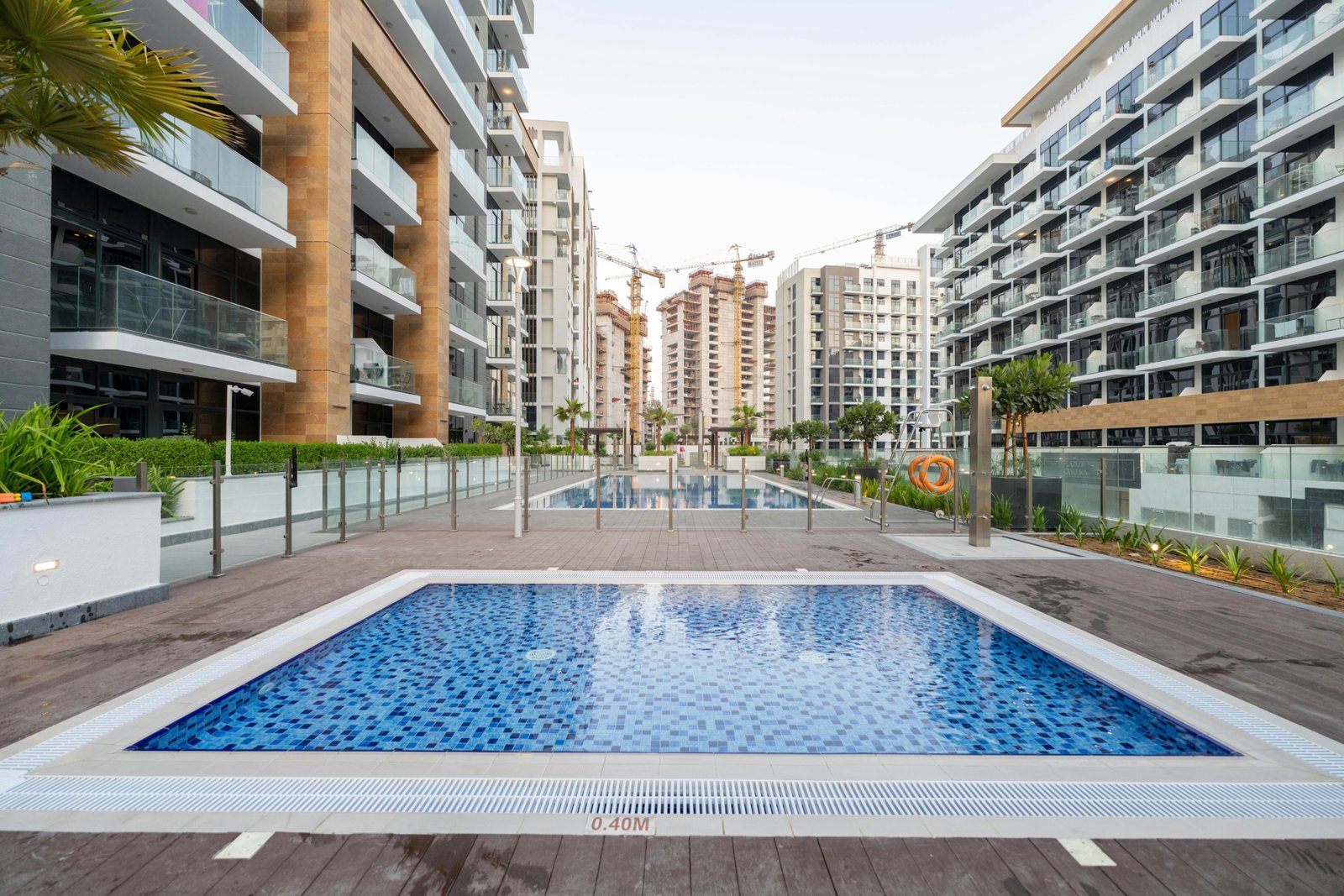
Freehold ownership in Dubai is available to foreign nationals in designated freehold zones, which encompass the vast majority of the residential investment market — Downtown, DIFC, Palm Jumeirah, Dubai Hills Estate, JVC, Business Bay, and the established villa communities. The transaction cost structure is predictable: Dubai Land Department fee of 4% of the purchase price (paid at registration), real estate agency commission of approximately 2%, and — for off-plan purchases — Oqood (interim registration) of AED 3,000–5,000. Total acquisition cost on a AED 2 million purchase runs approximately AED 140,000–160,000 excluding financing costs. Title deed is issued on completion; for off-plan, the Oqood serves as the interim title document until handover.
The choice between off-plan and ready units is one of the most consequential decisions in structuring a 2026 entry, and it involves trade-offs that are worth evaluating explicitly rather than defaulting to whichever the developer is currently promoting. Off-plan units in established corridors are launching at 10–20% below ready-unit comparables, with post-handover payment plans — typically 60/40 or 70/30 — deferring a significant portion of the purchase price until after the developer delivers the unit. The economics of a well-selected off-plan purchase can be compelling. The risks — developer delivery, corridor absorption, valuation at handover — are real and need to be assessed against the developer’s track record rather than the payment plan headline. The trade-offs across the full Dubai property 2026 timing decision — off-plan versus ready, corridor absorption risk, payment plan structure — are worth working through systematically as part of entry structuring.
Financing: LTV, Rate Structures, and Complex Cases
UAE bank mortgage financing is available to both residents and non-residents, with materially different LTV ceilings. Residents purchasing a first property can access up to 80% LTV on values up to AED 5 million; investment properties and second purchases attract a 75% ceiling. Non-resident buyers are limited to 50% LTV regardless of income or asset base. EIBOR-linked variable mortgages are currently pricing at approximately 5.5–6.0% all-in; 3-year fixed rates are available at 4.0–4.5% for qualified applicants. The rate decision — fix versus variable — interacts with the serviceability calculation in ways that matter particularly for borrowers near the 50% debt-burden ratio ceiling.
| Buyer Type | Maximum LTV |
|---|---|
| Resident: First Home (up to AED 5 million) | 80% |
| Resident: Investment Property | 75% |
| Non-Resident | 50% |
For investors with complex income profiles — self-employed founders, executives with equity compensation, multi-jurisdiction tax residents, recent relocators without UAE income history — standard bank channels frequently decline applications that are structurally sound. The issue is not creditworthiness; it is the documentation presentation. UAE banks apply conservative income calculation methodologies to non-standard files, and the gap between what a borrower actually earns and what a bank’s underwriting checklist will credit them with can be substantial. Securing UAE mortgage approval with a complex income profile requires specialist file construction, lender selection based on methodology matching, and credit committee advocacy that a standard bank relationship manager does not provide. This is a solvable problem — but it requires a different approach from the outset.

How to Buy Dubai Property: A Step-by-Step Guide
Dubai property investment follows a predictable sequence. Understanding the structure in advance prevents the mis-sequencing errors that increase cost and delay for buyers without a ground-level advisory relationship: financing applied for after a purchase commitment is made, Golden Visa not factored into the qualifying purchase threshold, or off-plan Oqood not aligned to the minimum value for residency eligibility.
- Define your investment objective. Yield, capital appreciation, Golden Visa eligibility, or operational base: these objectives drive different corridor and unit type selections. A buyer optimising for yield will make different decisions than one optimising for lifestyle access or residency qualification.
- Select your corridor. Apply corridor analysis to your holding period, yield target, and exit buyer profile. Mid-market corridors (JVC, Business Bay, Al Furjan) support yield and liquidity objectives. Villa communities (Dubai Hills, Arabian Ranches) support family and appreciation objectives. Luxury corridors (Palm, Downtown) serve trophy and operational base objectives.
- Choose between ready and off-plan. Ready units generate immediate rental income and carry no delivery risk. Off-plan units in established corridors typically price 10–20% below ready-unit comparables with post-handover payment plans. The trade-off is a 24–36 month income gap and delivery risk that requires developer due diligence.
- Arrange financing before committing. Pre-approval before making an offer is standard practice for financed purchases. Non-resident buyers face a 50% LTV ceiling. Complex income profiles require specialist file construction before lender submission to ensure the application is structured for the correct lender methodology.
- Complete Dubai Land Department registration. DLD fee of 4% is paid at registration. Title deed is issued on transfer for ready units. Oqood serves as the interim title document for off-plan purchases and is the qualifying document for Golden Visa applications where the purchase meets the AED 2 million threshold.
- Apply for the Golden Visa if eligible. Purchases at or above AED 2 million qualify for the 10-year Dubai Golden Visa. The application is initiated after DLD registration and includes family members under the same filing. No minimum annual stay is required to maintain the visa once issued.
The Residency and Tax Layer
Golden Visa at AED 2 Million and the Broader Residency Structure
Property purchases at or above AED 2 million qualify the buyer for the UAE Golden Visa — a 10-year renewable residency permit with no minimum annual stay requirement and full family sponsorship rights for spouse, children, and domestic staff. For investors purchasing at or near the qualifying threshold, the Golden Visa converts a capital allocation into a legal status that provides school access, healthcare access, banking relationship establishment, and operational base flexibility across a ten-year window without the visa dependency on employer sponsorship that characterises standard UAE residency.
For buyers constructing a multi-jurisdictional mobility structure, the Golden Visa operates as the UAE’s investment-linked residency programme — one of the strongest in the world at its price point relative to EU equivalents. The distinction between residency vs citizenship investment — UAE Golden Visa as operational base versus a second passport from a Caribbean or European CBI programme — is worth resolving before completing the property purchase, since the AED 2M qualifying threshold will influence whether a single unit or a split portfolio approach is the right structure for a specific family’s requirements.
Tax Efficiency and the Compounding Advantage Over Time
The UAE’s zero personal income tax and zero capital gains tax environment changes the net return calculation fundamentally against most markets investors are moving capital from. In the UK, rental income from an investment property is taxed at the investor’s marginal income tax rate — 40% or 45% for HNW individuals — and capital gains on disposal are taxed at 24% above the annual exemption. In Spain, rental income tax for non-residents runs 19–24%, and capital gains are taxed at 19–28% depending on the gain. In both cases, the drag across a seven-year holding period is substantial and front-weighted — the income tax applies every year, not just at exit.
In Dubai, the full gross-to-net compression on rental income is service charges and management fees only. On a AED 1.5 million mid-market unit generating AED 105,000 annually at 7% gross, the net after service charges and management is approximately AED 90,000–95,000 — and all of it is retained by the investor. The same economic position in London would deliver AED 50,000–55,000 after tax at the 45% rate. Across seven years, that difference in annual after-tax income — before considering the CGT advantage on exit — accumulates to a compounding gap that makes the Dubai position materially superior on total return terms, independent of whether the underlying property appreciates more or less than its UK equivalent.

Risk, Concentration, and the Selection Decision That Matters Most
Developer Risk and RERA’s Structural Protections
Dubai’s Real Estate Regulatory Agency mandates that developers maintain project escrow accounts, with construction-milestone-linked fund releases certified by approved independent engineers. This escrow framework is the primary structural protection for off-plan buyers — it prevents developers from deploying buyer funds across other projects before the purchased unit is delivered. Escrow compliance is publicly verifiable through the Dubai REST platform, and any developer unable to confirm active escrow registration for a specific project should be treated as an unacceptable risk regardless of payment plan terms or brand reputation.
Beyond escrow compliance, the meaningful indicators of developer quality are: on-time delivery percentage across prior completed projects, volume of units delivered in a similar price bracket to the current launch, the track record of service charge management in delivered communities, and the presence or absence of post-handover snagging disputes. Developers with large completed portfolios in the AED 1–3 million range — Emaar, Nakheel, Damac for established product — have demonstrated delivery capability at scale. Smaller or newer developers with limited completion history require a higher discount to the ready-unit price to justify the additional delivery risk.

Corridor Selection and Exit Liquidity
The liquidity of a Dubai property position at exit — the speed and pricing confidence with which it converts back to cash — varies more by corridor than by developer or asset quality. Luxury units above AED 5 million in Palm Jumeirah or DIFC transact with a narrower buyer pool at any given moment: the exit is achievable but requires patience, pricing at or slightly below comparable sales, and tolerance for a holding period that may extend beyond the target window if global risk appetite contracts. Mid-market units in the AED 900,000–2.5 million range in JVC, Business Bay, and Dubai Hills transact with materially higher velocity and a broader buyer pool that includes UAE-resident end-users — producing faster exit execution and better pricing confidence across most market conditions.
The highest exit risk sits in fringe mid-market corridors — outer districts with incomplete infrastructure and no established rental or resale base — where off-plan launches have been absorbing investor capital at prices that assume future demand materialisation rather than existing absorption. Selecting within corridors that have demonstrated occupier demand — evidenced by sub-10% vacancy, active secondary market transaction data from DLD, and service charge payment compliance in existing stock — is the single selection criterion that most reliably separates well-performing Dubai investment positions from those that underperform. The developer, the payment plan, and the unit specification matter less than getting this decision right first.
Dubai real estate in 2026 rewards investors who enter with a complete analytical framework — understanding which segment, which corridor, which purchase structure, and which financing approach serves their specific return objective and holding period. The market has matured enough that a useful Dubai real estate guide cannot be built around generic exposure — the uniform outperformance of 2021–2022 is not the baseline forward projection. The investors who will look back on 2026 as a well-timed entry are those who made the selection and structuring decisions precisely rather than those who moved fastest on the broadest available allocation.
Dubai Real Estate Investment: Frequently Asked Questions
Is Dubai real estate a good investment in 2026?
Yes, for investors with the right entry framework. Dubai real estate offers a combination of rental yield, capital appreciation potential, tax efficiency, and residency overlay that is difficult to replicate in comparable markets. Mid-market corridors are producing net yields of 6.5–7.5% in a zero-income-tax environment, and the Golden Visa at AED 2 million converts a capital allocation into a ten-year legal status. The principal risks, developer delivery on off-plan, corridor absorption in fringe areas, and exit liquidity in the luxury segment, are manageable with precise corridor and asset selection.
What rental yield can investors expect in Dubai?
Rental yields vary significantly by segment. Mid-market corridors including JVC, Business Bay, and Al Furjan produce gross yields of 7–8.5% and net yields of 6.5–7.5% after service charges and management fees. Luxury segments including Downtown Dubai and Palm Jumeirah yield 3–5% gross. Villa communities produce 4–6% gross. The absence of income tax on rental receipts means the full net yield is retained, which changes the comparison materially against taxed markets.
Can foreigners buy property in Dubai?
Yes. Foreign nationals can purchase freehold property in Dubai’s designated freehold zones, which cover the vast majority of the residential investment market including Downtown Dubai, DIFC, Palm Jumeirah, Dubai Hills Estate, JVC, and Business Bay. There is no nationality restriction on ownership, no UAE residency requirement at the time of purchase, and no minimum hold period before resale. Non-resident buyers can access mortgage financing at up to 50% LTV through UAE banks.
How much deposit is required to buy property in Dubai?
The deposit depends on buyer type. Non-resident buyers using mortgage financing must provide a minimum 50% deposit. UAE residents purchasing a first home can access 80% LTV, requiring a 20% deposit. Residents purchasing an investment property or second home face 75% LTV, requiring a 25% deposit. Cash buyers have no deposit requirement. Transaction costs add approximately AED 140,000–160,000 on a AED 2 million purchase (4% DLD fee plus approximately 2% agency commission).
Does buying property in Dubai qualify for the Golden Visa?
Yes, for purchases at or above AED 2 million. The UAE Golden Visa provides a 10-year renewable residency permit with no minimum annual stay requirement and full family sponsorship rights. The qualifying property must be registered with the Dubai Land Department. For off-plan purchases, the Oqood value must meet the AED 2 million threshold. For a detailed breakdown of qualification mechanics, see the Dubai Golden Visa guide.
Is off-plan or ready property better for investors?
Both structures have a valid investment case depending on the buyer’s objective. Off-plan units in established corridors typically price 10–20% below ready-unit comparables and offer post-handover payment plans that defer capital outlay. The trade-offs are delivery risk, a 24–36 month income gap, and corridor absorption uncertainty at handover. Ready units generate immediate rental income and carry no delivery risk. The choice depends on yield timeline requirements, tolerance for delivery uncertainty, and whether the buyer’s financial structure benefits from the deferred payment model.
What are the main risks of investing in Dubai property?
The principal risks in Dubai property investment are: developer delivery risk on off-plan purchases, mitigated by RERA escrow requirements and developer track record assessment; corridor absorption risk in fringe areas where supply is outpacing occupier demand; exit liquidity risk in the luxury segment where the buyer pool is narrower; and mortgage rate risk on variable-rate EIBOR-linked financing. Dubai does not impose capital gains tax or income tax on property. The main cost on exit is the 4% DLD transfer fee paid by the buyer.
How Helis Helps Investors Enter Dubai Real Estate
Helis International operates as an integrated advisory firm for investors approaching the Dubai property market, covering acquisition, financing, Golden Visa application, and ongoing property management within a single client relationship. For non-resident and internationally mobile investors, this removes the coordination overhead that comes from managing multiple specialist providers across a purchase transaction.
A UAE mortgage application with a complex income profile requires specialist file construction and lender selection based on methodology matching. A Dubai Golden Visa application requires document sequencing aligned to the property registration timeline. Property management post-acquisition requires on-the-ground relationships with contractors, tenants, and building management. Each of these is a distinct operational layer. Handled within one advisory relationship, they become a coordinated sequence rather than a series of separately managed processes.
To discuss a specific Dubai property investment objective, including corridor selection, financing structure, or Golden Visa eligibility, contact the Helis real estate advisory team directly.