For high-net-worth investors and families evaluating global mobility options in 2026, the residency vs citizenship investment decision is one of the most consequential choices in the entire wealth planning stack. The two routes are frequently conflated in marketing materials and even in advisory conversations, but they produce fundamentally different legal outcomes, carry different cost structures, and serve different strategic purposes. Getting the distinction right before committing capital is not a detail — it is the foundation of the decision.
The comparison is also not static. Programme terms change, geopolitical conditions shift, and what was the right structure for a family in 2021 may not be the optimal structure in 2026. This guide breaks down the residency vs citizenship investment question in full — what each route actually delivers, which programmes are worth serious consideration in 2026, and how sophisticated investors combine both to build genuinely resilient mobility positions.

The Core Difference: What Each Programme Actually Grants
The distinction between residency and citizenship is a legal one, and it is sharper than most investors initially appreciate. Understanding what each status grants — and critically, what it does not — determines which route solves the actual problem the investor is trying to solve.
What Residency-by-Investment Actually Grants
Residency-by-investment grants the right to live legally in the issuing country. It does not confer nationality, does not upgrade the holder’s passport, and does not provide the holder with the diplomatic protection of the issuing country when travelling on their home country passport. The practical outputs of an RBI programme are: the right of abode in that jurisdiction, access to its healthcare, education, and property ownership systems, and — depending on the jurisdiction — preferential tax treatment for qualifying residents.
Critically, residency status is conditional and time-limited in most programmes. It must be renewed, typically every one to five years depending on the programme. Some programmes impose minimum stay requirements to maintain valid status — Portugal’s Golden Visa residency requires just seven days per year, while the UAE Golden Visa currently imposes no formal minimum stay requirement, which is unusually permissive. Residency permits can be revoked if qualifying investment conditions are no longer met, if the programme is restructured, or if the holder fails to meet renewal conditions. This conditionality is the defining vulnerability of RBI that CBI does not share.
What Citizenship-by-Investment Actually Grants
Citizenship-by-investment confers full legal nationality in the issuing country. The holder receives a passport of that country, is entitled to its diplomatic representation abroad, can generally transmit citizenship to children born after naturalisation in most programmes — subject to the receiving country’s nationality transmission rules — and holds a status that is highly durable, carries no renewal obligation, and is not contingent on maintaining any qualifying investment. The passport is the operative output: it is what determines visa-free access to third countries, eligibility for banking relationships, business registration rights in other jurisdictions, and the holder’s practical mobility independent of their home country document.
The legal permanence of citizenship is its defining advantage. A Maltese citizen holds EU citizenship permanently, regardless of how much time they spend in Malta, regardless of investment conditions, and regardless of what happens to Malta’s CBI programme in the future. Their children can generally inherit that status, subject to Maltese nationality law. This durability of status is what justifies the significantly higher cost of CBI programmes relative to RBI — it is a one-time acquisition of a permanent legal status, not an ongoing subscription to a conditional right.

Residency-by-Investment Programmes Worth Holding in 2026
The RBI landscape has consolidated significantly over the past three years. Programme closures, restructurings, and tightening eligibility criteria have reduced the number of genuinely attractive options, which has paradoxically made the remaining strong programmes more valuable. These are the programmes that merit serious evaluation in 2026.
UAE Golden Visa — The Benchmark RBI for Gulf-Based Investors
The UAE Golden Visa remains the most operationally sound investment-linked residency programme available to international investors in the Gulf region. The qualifying threshold for property investors is AED 2 million — which can be met through completed or off-plan purchases — with no employer sponsorship requirement, no formal minimum annual stay obligation currently in place, and full family sponsorship rights for spouse, children, and domestic staff. The visa is valid for ten years and renewable indefinitely, and it sits within a jurisdiction that levies zero personal income tax and 9% corporate tax only on profits exceeding AED 375,000 annually.
The Investment Case — UAE Residency as a By-product of Capital Allocation
What makes the UAE Golden Visa practically different from most RBI programmes is that the qualifying investment is not a cost — it is a capital allocation into a real estate market that generates rental income and has appreciated materially since the programme launched. Investors who qualify through Dubai property are not paying for residency; they are earning a residency right as a by-product of an investment they would make regardless of the visa. The programme has also expanded eligibility significantly since 2019, now covering entrepreneurs with validated projects, professionals in priority sectors, and investors in approved public funds. For detailed programme mechanics and a comparison with European and Asian alternatives, the Dubai Golden Visa guide covers qualification routes, thresholds, and the full document checklist.
For investors at the pre-commitment stage benchmarking the UAE property route against Europe and Asia alternatives, our UAE residency by property investment (RBI) analysis covers all five programmes — Greece, Portugal, Malta, Singapore, and UAE — across investment thresholds, stay requirements, EU access, and citizenship pathways.

Portugal, Greece, and Malta — EU Access Through Residency
For families requiring European Union access, three RBI programmes remain operative and genuinely useful in 2026, each with a different cost profile and practical logic.
Portugal, Greece and Malta — Programme Structures Compared
Portugal’s programme, restructured in 2024 after the closure of the direct property route, now channels qualifying investment through approved venture capital and private equity funds at a minimum of €500,000. Residency permits are renewable every two years with a minimum stay of seven days annually, and eligibility to apply for Portuguese citizenship — and with it, EU citizenship — begins at the five-year mark, though processing backlogs and language requirements mean practical timelines often extend beyond that threshold. Portugal’s IFICI tax regime offers new qualifying residents a 20% flat tax on Portuguese-source income for ten years, which remains a draw for entrepreneurs and executives relocating from higher-tax European jurisdictions.
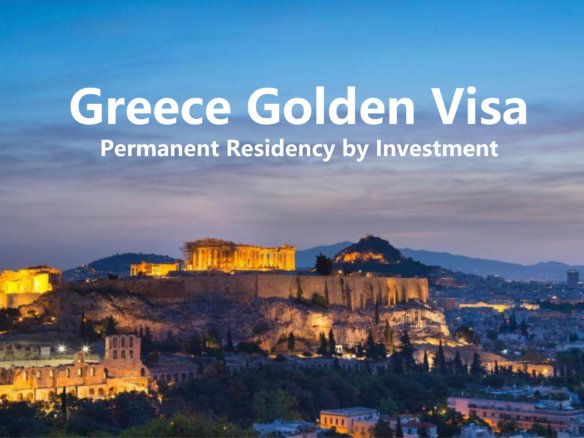
Greece’s Golden Visa retains a direct property route, though the minimum investment was raised to €800,000 in Athens, Thessaloniki, Mykonos, and Santorini in 2024, while remaining at €250,000 in lower-demand regions. Schengen residency is the primary output — Greece’s pathway to citizenship requires seven years of residency and language proficiency, making it a longer-term play than Portugal for those seeking naturalisation. A full breakdown of Greece’s investment routes, zone thresholds, and citizenship timeline is covered in the Greece Golden Visa guide. Investors focused specifically on Greece’s residency structure — EU rights, the seven-year citizenship pathway, and the non-dom flat tax — will find the operational detail in the Greece residency for investors guide. Malta’s MRVP — the Malta Permanent Residence Programme — differs from both in offering permanent residency rather than a renewable permit. The structure requires a €150,000 government contribution, a property purchase of at least €375,000 or a rental commitment of €14,000 annually, plus an ongoing fee of €5,500 per year. For families where EU access is the primary objective but citizenship is not the immediate goal, Malta’s permanent residency is a practical and stable structure.

Where RBI Falls Short — The Conditional Risks to Understand
Portugal’s 2023 closure of its direct property route is the defining cautionary example for the RBI market. Families who had structured their EU access strategy entirely around Portuguese property residency — particularly those who had not yet reached the five-year citizenship threshold — found themselves with a qualifying asset but an uncertain programme future. The political pressure that drove that closure — housing affordability concerns in Lisbon and Porto — is present in other RBI markets as well, including Spain and Ireland, both of which have closed or restricted equivalent programmes in recent years.
The lesson is not that RBI programmes are unreliable — the better-established ones have shown durable governance. It is that over-concentration in a single RBI position without a secondary or tertiary structure creates renewal risk and programme change risk simultaneously. Investors who treat RBI as a permanent solution rather than a renewable conditional status are the ones who face the most disruption when programmes evolve.

Citizenship-by-Investment: Second Passport Programmes Worth Evaluating in 2026
The CBI market in 2026 is smaller than it was five years ago — Cyprus was shut down under EU pressure in 2020, and several Caribbean programmes have tightened due diligence requirements significantly. What remains is a set of well-established programmes with long track records, clear investment structures, and genuinely useful passport outputs.
Caribbean CBI — Four Programmes, Four Different Use Cases
The four primary Caribbean CBI programmes each occupy a slightly different position in the market, and the choice between them depends on the investor’s specific objective rather than headline cost alone.
Saint Kitts and Nevis, the oldest CBI programme in operation (established 1984), requires a minimum $250,000 government contribution for a single applicant, rising with family size. The Saint Kitts passport provides visa-free or visa-on-arrival access to over 150 countries including the UK, EU Schengen, and Singapore. Processing is typically four to six months. Dominica offers the lowest entry point in the credible Caribbean CBI market at $100,000 for a single applicant, with 140+ visa-free destinations and a processing timeline of three to four months. Antigua and Barbuda requires a $130,000 contribution and delivers access to over 150 destinations. Grenada is the most strategically differentiated of the four: at $235,000 minimum contribution, a Grenada passport is the only Caribbean CBI document that qualifies the holder for the US E-2 Treaty Investor Visa — making it particularly valuable for investors who need a pathway to long-term US business presence that their home country passport does not provide.
Malta CBI — EU Citizenship at Significant Cost
Malta’s Citizenship by Naturalisation for Exceptional Services by Direct Investment — the MEIN programme — is the only remaining EU citizenship-by-investment pathway available to non-EU nationals. It is also the most expensive CBI programme in the world when total costs are tallied: a minimum €750,000 government contribution (rising to €600,000 after 36 months of residency), a €700,000 property purchase or €16,000 annual rental commitment, a €10,000 charitable donation, and associated due diligence and professional fees that typically add €50,000 to €100,000 to the total outlay.
The output justifies the cost for the right applicant. A Malta passport is an EU passport — the holder can live, work, and establish businesses across all 27 EU member states without restriction, access Schengen travel across 26 countries, and travel visa-free to 185 destinations including the United States. The citizenship can generally be transmitted to future generations subject to Maltese nationality law, carries no renewal obligation, and grants the holder full EU diplomatic representation. For HNW families where EU access, business establishment rights across Europe, and generational permanence are all objectives simultaneously, Malta’s programme — at its cost — remains the only currently operational route that delivers all three.
What Second Passport Quality Actually Means in Practice
Visa-free destination counts are a useful headline comparison but an incomplete measure of passport quality for HNW investors. The metrics that matter most at the operational level are: E-2 treaty access (relevant for US business intentions — only certain nationalities qualify), banking relationship eligibility in major financial centres (some jurisdictions screen by nationality at account opening), business registration rights in target markets, and the reputational standing of the issuing country in due diligence processes. A passport from a jurisdiction with a strong FATF compliance record and transparent governance opens different doors than a passport from a jurisdiction with due diligence concerns, even if the visa-free count is comparable on paper.

The Decision Framework: When RBI, When CBI, and When Both
The RBI versus CBI question rarely resolves cleanly in favour of one or the other. The more useful framework is to identify what specific problem the investor is trying to solve, and then determine which structure — or which combination — addresses it most efficiently.
When RBI Is the Right Structure
RBI is the right primary structure when the qualifying investment stands independently on its own merit — as it does with the UAE Golden Visa and Dubai property. It is also the right structure when the investor wants to test a jurisdiction before committing to citizenship: living under Portuguese or Greek residency for two to three years before deciding whether to pursue naturalisation is a rational sequencing of decisions. RBI is further appropriate when the investor’s home country restricts or penalises dual nationality — in which case citizenship acquisition creates legal complications that residency does not. And it is appropriate when the investor’s objective is specifically access to a jurisdiction’s systems — its schools, its healthcare, its banking — rather than the passport of that jurisdiction.
When CBI Is the Right Structure
CBI is the right structure when the investor’s home country passport is the primary constraint — when it does not provide visa-free access to markets the investor operates in regularly, or when it creates friction in banking relationships, business registration, or professional licensing. It is the right structure when permanence is the objective: families with a credible multi-generational planning horizon benefit from the substantially more permanent, non-conditional nature of citizenship in a way that renewable residency cannot replicate. And it is the right structure when political or currency risk in the home jurisdiction is acute enough that a legally independent second nationality provides genuine insurance rather than just convenience.
Building a Layered Mobility Structure
The most resilient residency vs citizenship investment approach for families with complex requirements is not to choose between RBI and CBI but to sequence them deliberately — using RBI as the operational first position and CBI as the permanent backstop that exists entirely independently of the RBI programme’s continued existence. A family holding UAE Golden Visa residency alongside a Saint Kitts citizenship has both an active, tax-efficient operational base and a permanent, programme-independent legal status that remains intact regardless of what happens to the UAE programme. The two positions serve different functions and do not compete with each other.
Structuring this sequence correctly — with the right programme choices, the right investment vehicles, and the right timing relative to the family’s tax residency transition — is the core of how HNW families are approaching global mobility planning in 2026, and it is where integrated advisory adds the most measurable value over a fragmented jurisdiction-by-jurisdiction approach.